Explorer
Log in

Historic Downtown Mackinac Admission

Aperçu
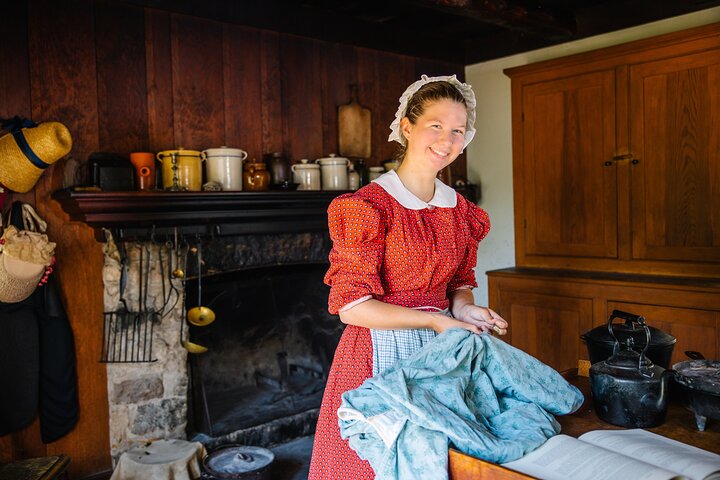
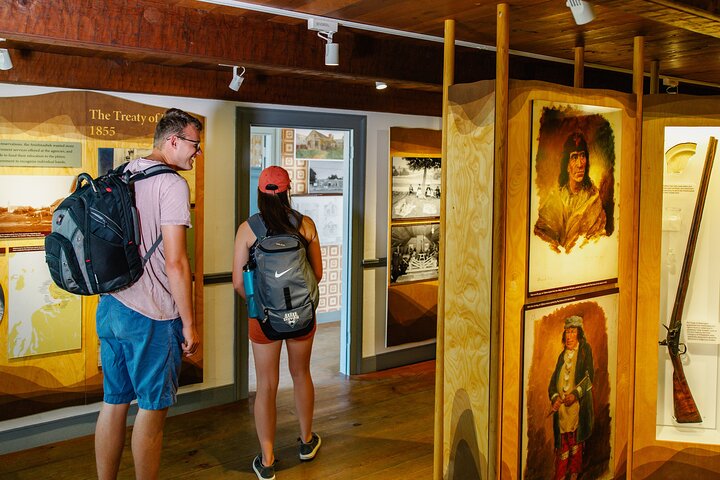
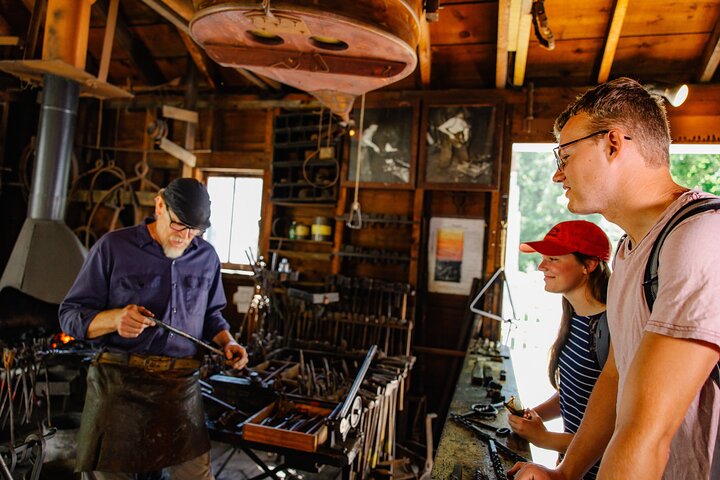
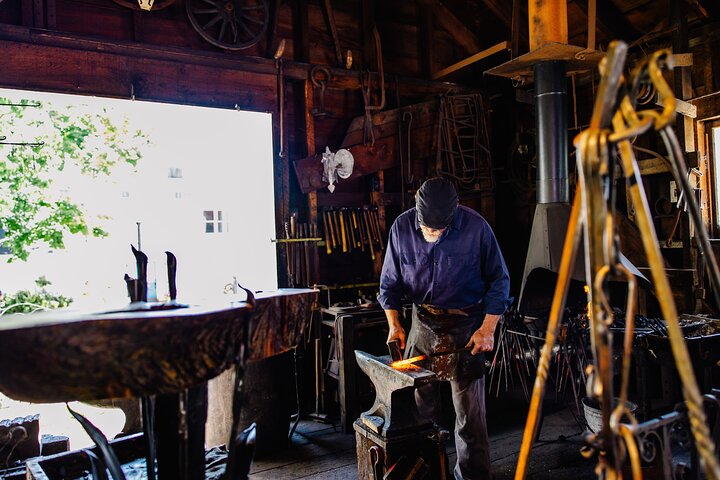
Historic Downtown Mackinac is a collection of historic sites located throughout downtown Mackinac Island, presenting history from pre-European contact into the 1950s. This self-guided museum experience includes The Biddle House, featuring the Mackinac Island Native American Museum, explores the history of the Anishnaabek people of Mackinac Island through the lens of Agatha Biddle, an Odawa woman who lived in the house in the 1830s. The Benjamin Blacksmith Shop is a working blacksmith shop set in the 1950s, toward the end of the shop's life. The Richard & Jane Manoogian Mackinac Art Museum displays works inspired by Mackinac Island, including a juried exhibition. The American Fur Co. Store & Dr. Beaumont Museum was the site of a famous accident that altered the course of medical history, while the McGulpin House is a rare example of French Canadian architecture, and possibly the oldest residence still standing on Mackinac Island.
Ville: Ville de Mackinaw
Tue 09 Jun
i
Vous pouvez déjà choisir la date sur le site de réservation
À partir de $10.50
Tue 09 Jun
À partir de $10.50
Faire une réservation
Ce qui est inclu
Admission to McGulpin House June 1-August 17
Admission to the American Fur Co. Store & Dr. Beaumont Museum June 1-August 17
Admission to McGulpin House June 1-August 17
Admission to the American Fur Co. Store & Dr. Beaumont Museum June 1-August 17
Admission to McGulpin House June 1-August 17
Admission to the American Fur Co. Store & Dr. Beaumont Museum June 1-August 17
Admission to McGulpin House June 1-August 17
Itinéraire et carte
Point de rencontre
Ouvrir dans Google Maps
Mackinac County
7406 Market St
Visitors can also exchange tickets at the Mackinac Island State Park Visitor's Center or The Richard & Jane Manoogian Mackinac Art Museum.
Point final
Cette activité se termine au point de rendez-vous.
Information additionnelle
  • Wheelchair accessible
  • Infants and small children can ride in a pram or stroller
  • Service animals allowed
  • Public transportation options are available nearby
  • Suitable for all physical fitness levels
À quoi s'attendre
1
Biddle House
Step into the home of Agatha and Edward Biddle, merchants who moved in around 1830. This was a time of change, and the 1830s were critical to the Biddles for another reason: as an Anishnaabek woman, Agatha and other indigenous people witnessed their culture subjected to immense changes. The decade transformed the Anishnaabek, linking old ways with Michigan’s modern indigenous culture. The continuing story of the Anishnaabek of northern Michigan is not always a happy one. It is a story of battles won and lost, promises made and broken, and cultures repressed and resurgent. Most importantly, the story in which the Biddle family played a role is one that continues today. This exhibit, created in conjunction with tribal partners, explores that story and how it still resonates on Mackinac Island and throughout northern Michigan.
2
The Richard & Jane Manoogian Mackinac Art Museum
Nowhere else does such a rare and exceptional collection of Mackinac-related art and photography come together to tell Mackinac’s story. In complement to the natural beauty of Mackinac Island, The Richard & Jane Manoogian Mackinac Art Museum allows visitors to experience fine and decorative arts inspired by Mackinac through the ages. One of the most diverse art museums in the region, the museum’s collection offers no shortage of beauty and history – from hand-beaded Native American garments and 17th and 18th-century maps of the Great Lakes, to one-of-a-kind pieces from the height of Mackinac Island’s Victorian era. Original photographs from the mid-19th to the mid-20th century present the beauty of Mackinac as captured by the camera’s eye. Featured are the works of William H. Gardiner, including dozens of his famed early-twentieth century hand-tinted views.
3
Biddle House
Step into the home of Agatha and Edward Biddle, merchants who moved in around 1830. This was a time of change, and the 1830s were critical to the Biddles for another reason: as an Anishnaabek woman, Agatha and other indigenous people witnessed their culture subjected to immense changes. The decade transformed the Anishnaabek, linking old ways with Michigan’s modern indigenous culture. The continuing story of the Anishnaabek of northern Michigan is not always a happy one. It is a story of battles won and lost, promises made and broken, and cultures repressed and resurgent. Most importantly, the story in which the Biddle family played a role is one that continues today. This exhibit, created in conjunction with tribal partners, explores that story and how it still resonates on Mackinac Island and throughout northern Michigan.
4
The Richard & Jane Manoogian Mackinac Art Museum
Nowhere else does such a rare and exceptional collection of Mackinac-related art and photography come together to tell Mackinac’s story. In complement to the natural beauty of Mackinac Island, The Richard & Jane Manoogian Mackinac Art Museum allows visitors to experience fine and decorative arts inspired by Mackinac through the ages. One of the most diverse art museums in the region, the museum’s collection offers no shortage of beauty and history – from hand-beaded Native American garments and 17th and 18th-century maps of the Great Lakes, to one-of-a-kind pieces from the height of Mackinac Island’s Victorian era. Original photographs from the mid-19th to the mid-20th century present the beauty of Mackinac as captured by the camera’s eye. Featured are the works of William H. Gardiner, including dozens of his famed early-twentieth century hand-tinted views.
5
Biddle House
Step into the home of Agatha and Edward Biddle, merchants who moved in around 1830. This was a time of change, and the 1830s were critical to the Biddles for another reason: as an Anishnaabek woman, Agatha and other indigenous people witnessed their culture subjected to immense changes. The decade transformed the Anishnaabek, linking old ways with Michigan’s modern indigenous culture. The continuing story of the Anishnaabek of northern Michigan is not always a happy one. It is a story of battles won and lost, promises made and broken, and cultures repressed and resurgent. Most importantly, the story in which the Biddle family played a role is one that continues today. This exhibit, created in conjunction with tribal partners, explores that story and how it still resonates on Mackinac Island and throughout northern Michigan.
6
The Richard & Jane Manoogian Mackinac Art Museum
Nowhere else does such a rare and exceptional collection of Mackinac-related art and photography come together to tell Mackinac’s story. In complement to the natural beauty of Mackinac Island, The Richard & Jane Manoogian Mackinac Art Museum allows visitors to experience fine and decorative arts inspired by Mackinac through the ages. One of the most diverse art museums in the region, the museum’s collection offers no shortage of beauty and history – from hand-beaded Native American garments and 17th and 18th-century maps of the Great Lakes, to one-of-a-kind pieces from the height of Mackinac Island’s Victorian era. Original photographs from the mid-19th to the mid-20th century present the beauty of Mackinac as captured by the camera’s eye. Featured are the works of William H. Gardiner, including dozens of his famed early-twentieth century hand-tinted views.
7
Biddle House
Step into the home of Agatha and Edward Biddle, merchants who moved in around 1830. This was a time of change, and the 1830s were critical to the Biddles for another reason: as an Anishnaabek woman, Agatha and other indigenous people witnessed their culture subjected to immense changes. The decade transformed the Anishnaabek, linking old ways with Michigan’s modern indigenous culture. The continuing story of the Anishnaabek of northern Michigan is not always a happy one. It is a story of battles won and lost, promises made and broken, and cultures repressed and resurgent. Most importantly, the story in which the Biddle family played a role is one that continues today. This exhibit, created in conjunction with tribal partners, explores that story and how it still resonates on Mackinac Island and throughout northern Michigan.
8
The Richard & Jane Manoogian Mackinac Art Museum
Nowhere else does such a rare and exceptional collection of Mackinac-related art and photography come together to tell Mackinac’s story. In complement to the natural beauty of Mackinac Island, The Richard & Jane Manoogian Mackinac Art Museum allows visitors to experience fine and decorative arts inspired by Mackinac through the ages. One of the most diverse art museums in the region, the museum’s collection offers no shortage of beauty and history – from hand-beaded Native American garments and 17th and 18th-century maps of the Great Lakes, to one-of-a-kind pieces from the height of Mackinac Island’s Victorian era. Original photographs from the mid-19th to the mid-20th century present the beauty of Mackinac as captured by the camera’s eye. Featured are the works of William H. Gardiner, including dozens of his famed early-twentieth century hand-tinted views.
Show 5 plus d'arrêts
Politique d'annulation
All sales are final. No refund is available for cancellations.
Commentaires (2)
Ouvrir dans Google Maps
LitHSBlessings
Jul 2024
You buy a ticket to go into the historic buildings. You can buy a ticket just for the buildings or a combo ticket with the fort. If this is something you know you want to do off the ferry, I’d recommend heading to the blacksmith shop directly from the ferry. This will cut out walking along the congested main street. Cross Main Street (watching for bikes and horses-don’t linger in the road), Head up Hoban St away from the dock. Make a right on Market Street. The Biddle House and Benjamin Blacksmith shop will be on your left. You can get your tickets there and ask the locations of the historic buildings. Your ticket includes entrance into 5 buildings with exhibits; a few interpreters and there is a working blacksmith. We recommend picking out something from the blacksmith shop to buy as a souvenir. It is by donation and the blacksmith is one of the most informative we’ve found and very helpful to fellow blacksmiths. Exhibits tell about local families, local native American tribes, and the Alexis St. Martin story. There is a general store set up and a working kitchen as well. We also visited the church at the end of Market Street and the missionary hut on the green in front of the fort (although these were free to enter).
Réponse de l'hôte
Aug 2024
Thank you for this wonderful review of Historic Downtown Mackinac! We are truly lucky to have Monty and Josiah as our blacksmiths, as they are a wealth of information. We're thrilled you enjoyed your visit to the other sites, and we hope you are able to visit us again soon!
58PaulaG652
Jul 2024
I was very disappointed in your organization of the tour. You needed a map (that I would have printed) to know where the five stops were located. It was frustrating. We stopped At several places to obtain a map, no luck. We finally found a MAP at the Fort, which ironically was not on the tour. The locations were VERY interesting but TripAdvisor made the morning stressful
Réponse de l'hôte
Jul 2024
Thank you for taking the time to review. Four of the five Historic Downtown Mackinac sites are spread out along Market Street on Mackinac Island, with the fifth across Marquette Park on Main Street. We will see what can be done on the TripAdvisor listing to include better directions to the sties. Thank you for visiting, and, again, our apologies on the confusion on finding the sites.

Événements connexes

Événements dans le même quartier

Nous pensons que votre langue est English
Dans quelle langue souhaitez-vous voir cette page ?
English English
Nous pensons que votre ville est La ville de New York
Dans quelle ville souhaitez-vous explorer ?
La ville de New York
New York City