Explorer
Log in

Charte de visite privée du phare sur un bateau de pêche au homard d'époque

Aperçu
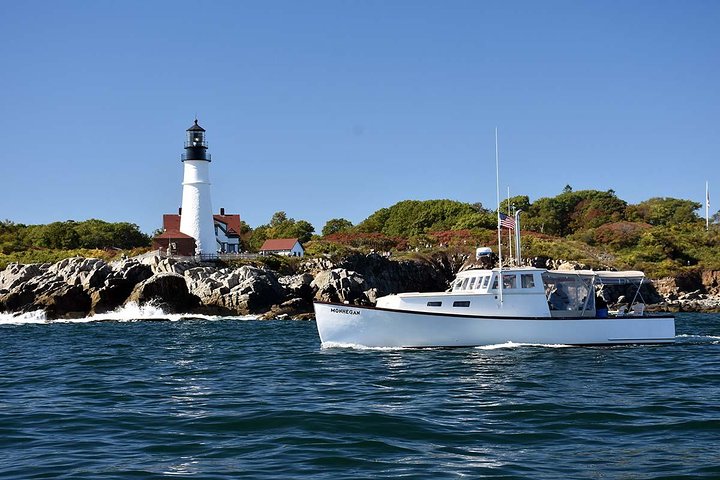
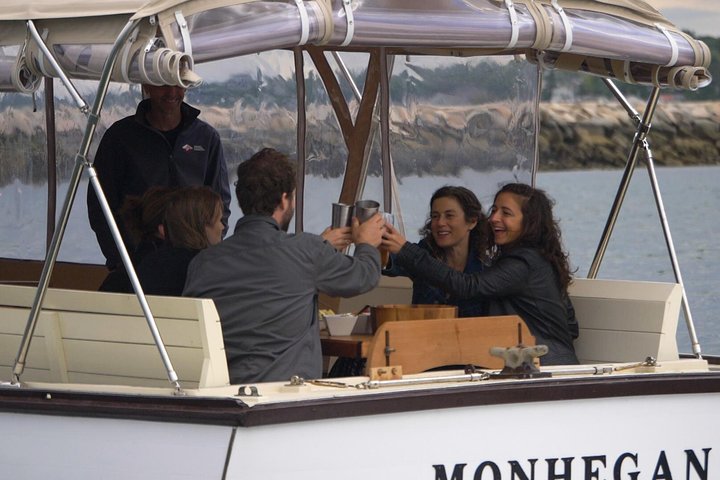
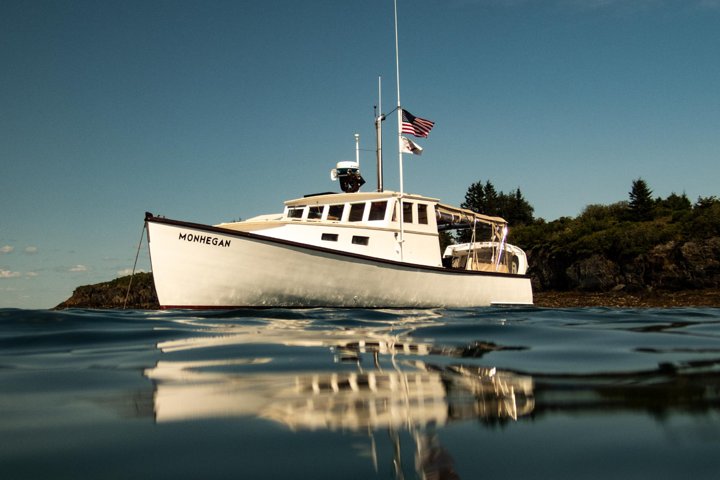
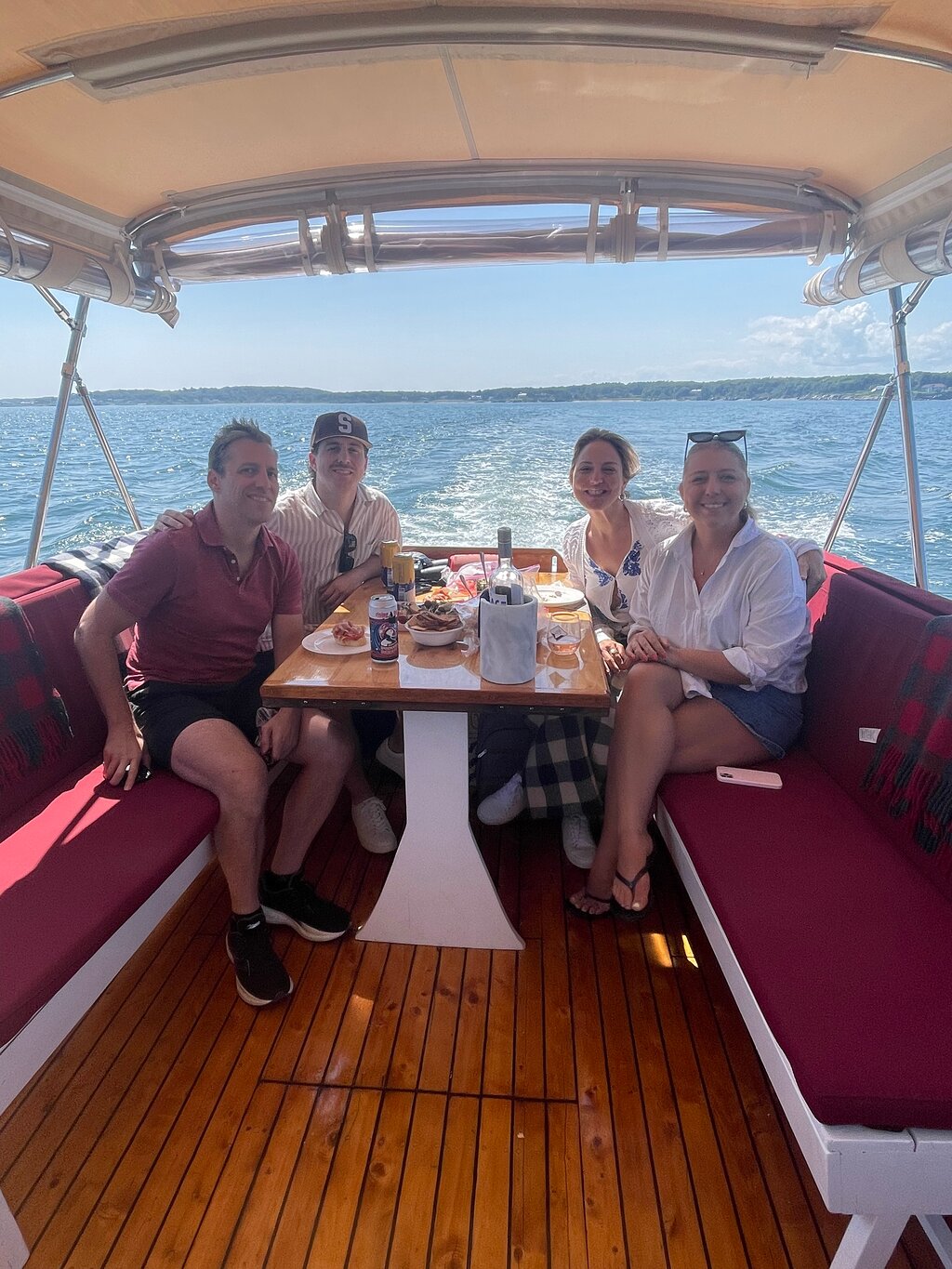
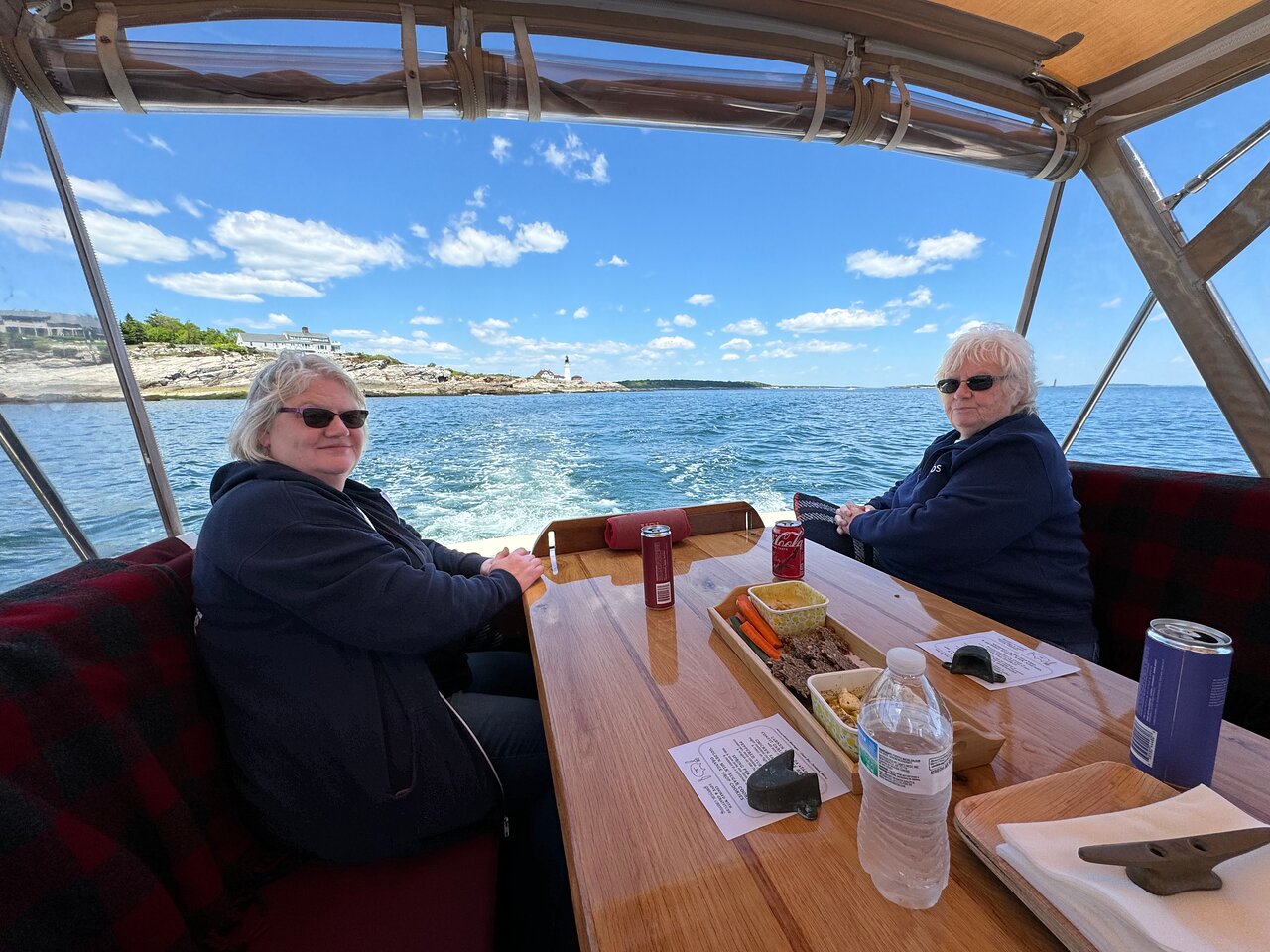
100% PRIVATE TOUR! Step aboard a vintage Maine Lobster Boat for a private, 2-hour lighthouse viewing & sightseeing charter. Leave the crowds behind as we cruise through the islands of Casco Bay, passing four iconic lighthouses, historic 19th-century forts, and the stunning Maine coastline.

Charters depart from Portland’s Old Port and are perfect for families and small groups. Each charter is completely private for up to 6 guests, and all ages are welcome!

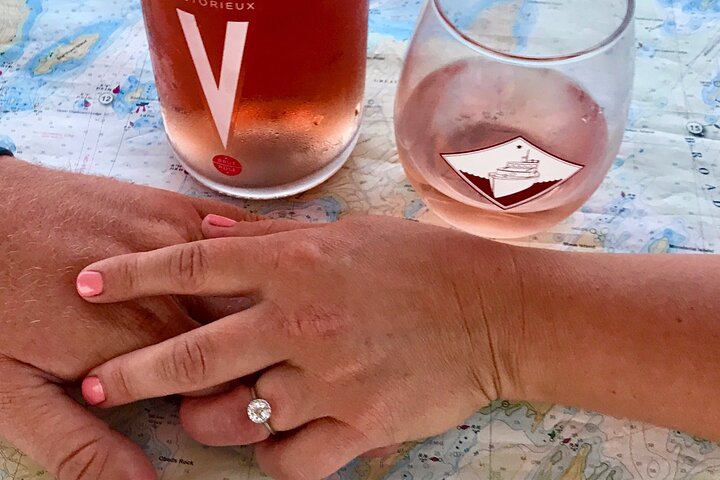
First round of drinks included – Enjoy a local Portland, Maine beer or a glass of wine as you take in the breathtaking views!

Ville: Portland
Tue 07 Jul
i
Vous pouvez déjà choisir la date sur le site de réservation
À partir de $380.10
Tue 07 Jul
À partir de $380.10
Faire une réservation
Ce qui est inclu
Bottled water
Beer and wine available for purchase on board.
All Fees and Taxes
MONHEGAN is equipped with an environmentally friendly composting toilet
This is a private charter for groups of up to 6 guests (including children)
Cooler and ice
Licensed Captain & Local Guide
Information additionnelle
  • Public transportation options are available nearby
  • Suitable for all physical fitness levels
À quoi s'attendre
1
Portland
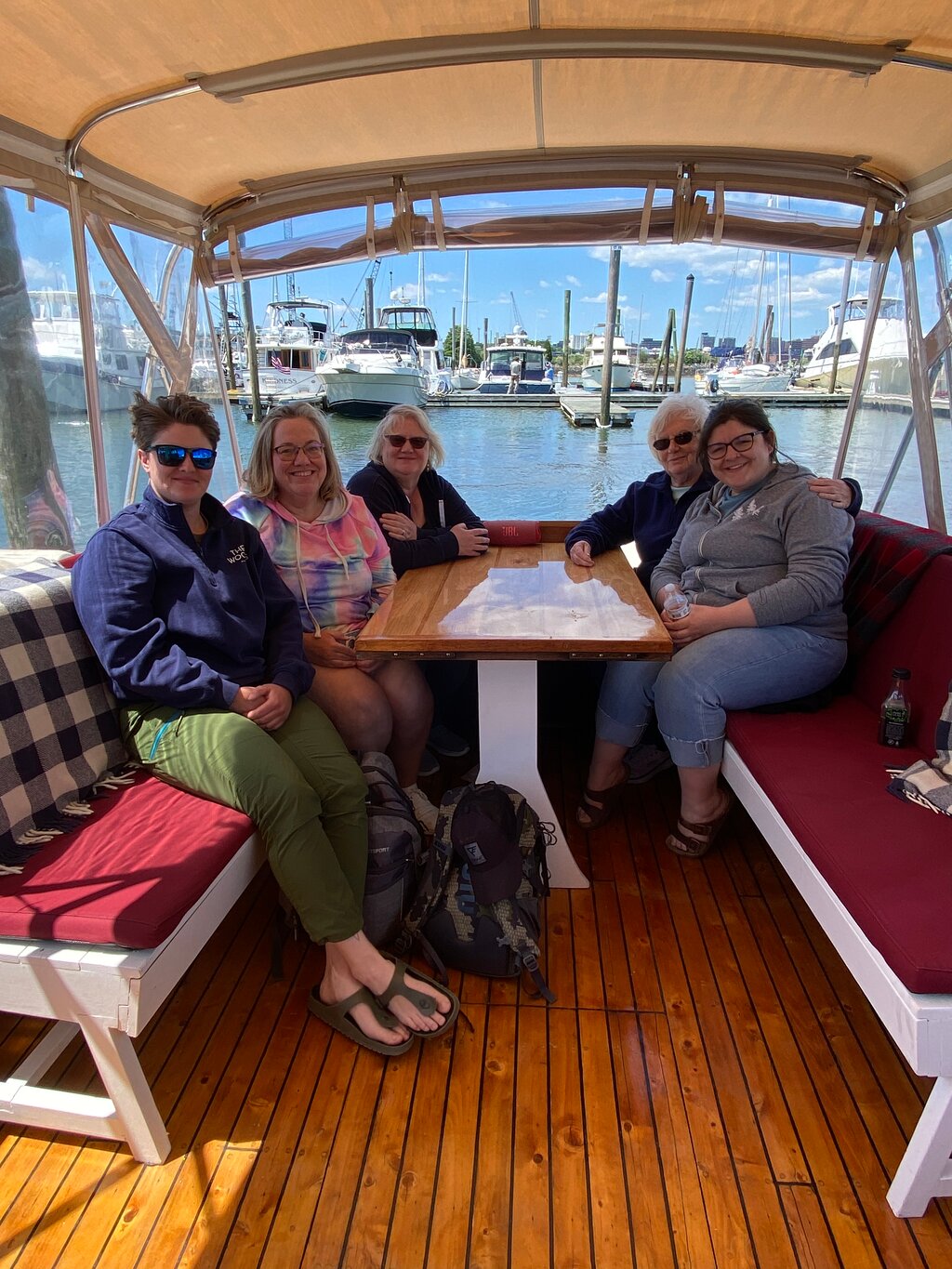
Board M/V MONHEGAN, a beautifully restored wooden lobster boat, and make yourself at home as you cruise through Portland's Harbor, past wharves dating to the period just after the Revolutionary War. At one point, Portland was one of the busiest harbors in the early decades of the United States, a fact attested to by the incredible stone fortresses protecting the harbor.
2
Bug Light Park
Marking the entrance to Portland Harbor, this small lighthouse is typically the first of four lighthouses we see on our sightseeing excursions aboard our vintage wooden boats.
3
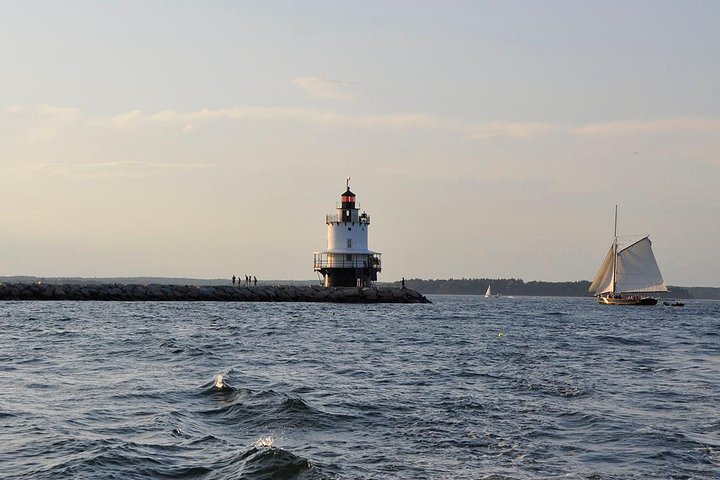
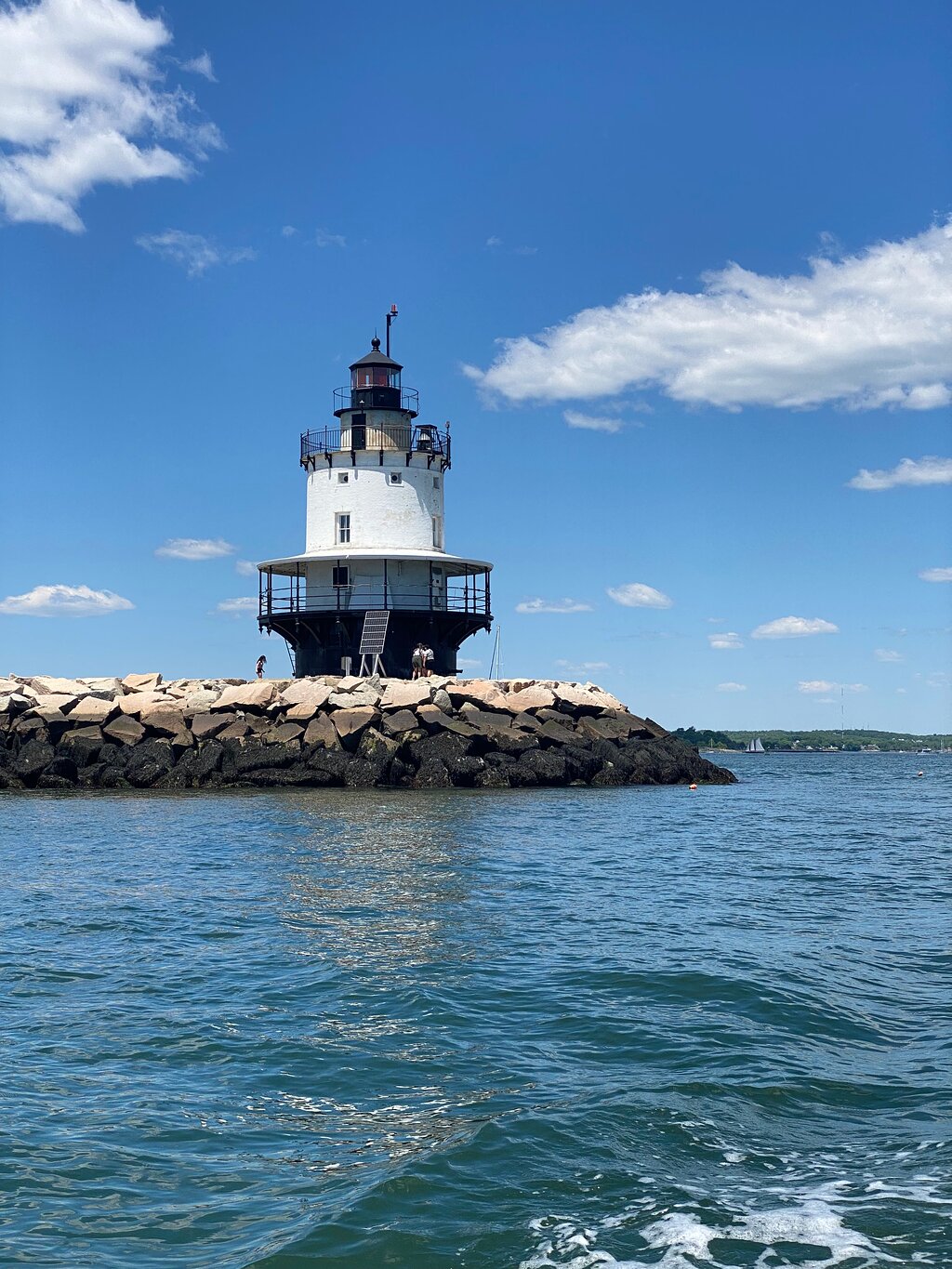
Spring Point Ledge Lighthouse
Get up close to Spring Point Light and nearby Fort Preble, a small gun emplacement built as a part of Portland's Harbor Defenses. In the early years, the lighthouse was not connected to the mainland by the granite breakwater that exists today, and ships that went on the wrong side of the lighthouse went aground on shallow ledge.
4
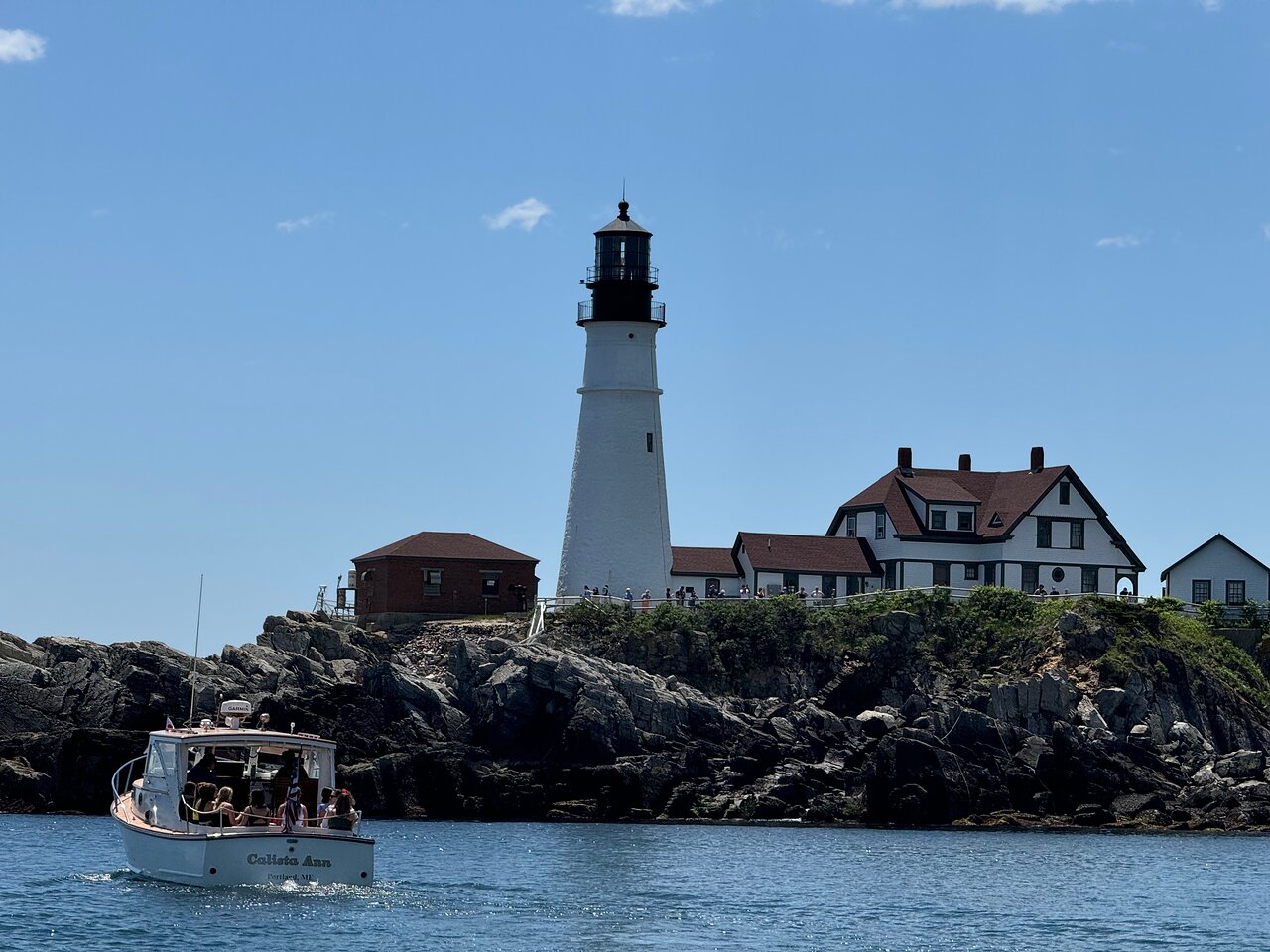
Portland Head Light
See Maine's most iconic lighthouse from the water. Weather and sea conditions permitting, we spend time in the waters in front of the lighthouse for photos and discussion about the history of the lighthouse. We do not go ashore or tour the lighthouse. Lighthouse is not open for tours as it is still an active navigational beacon.
5
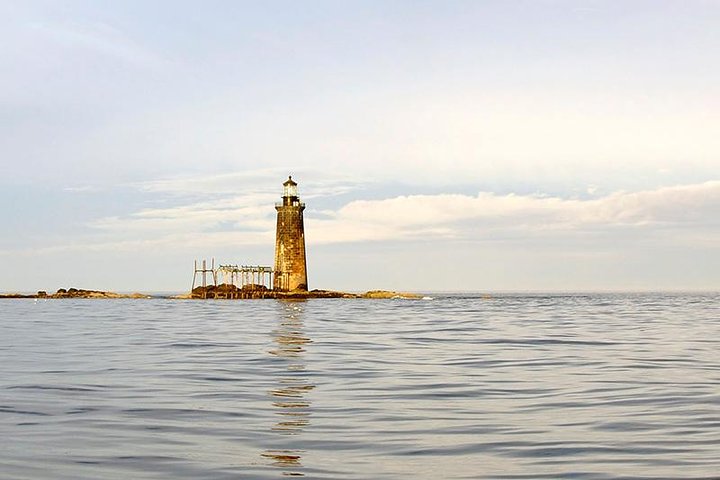
Ram Island Ledge Light
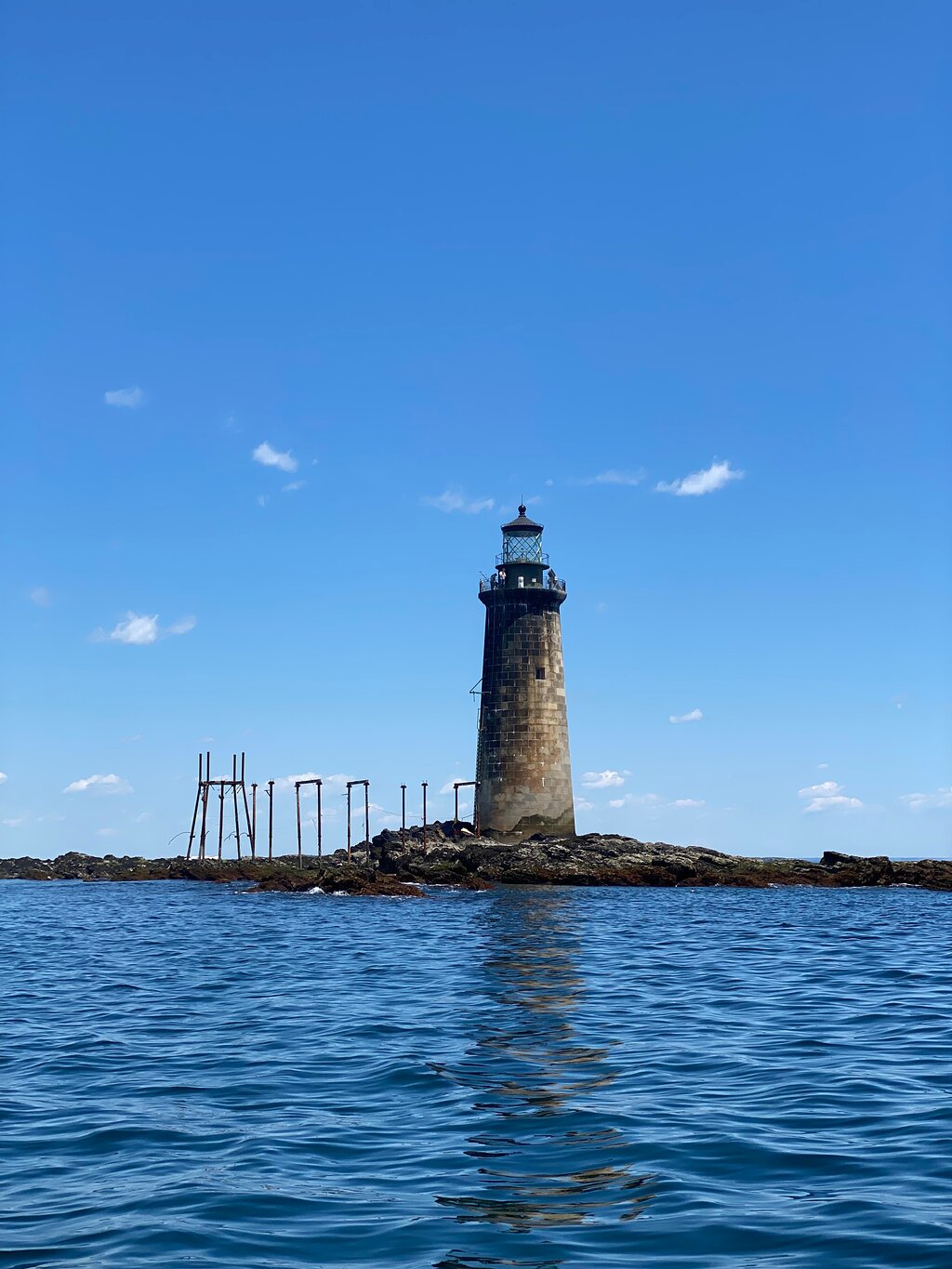
Marking the opposite side of the harbor channel from Portland Head Light, Ram Island Light sits atop a rocky ledge and at high tide appears to be floating and completely unattached to land. Whereas Portland Head Light has its stately keeper's house and beautiful white washed sides, Ram Island Light is weathered and gray almost inaccessible, with a now-derelict pier leading to a ladder that requires one to climb up 30 feet on the outside of the lighthouse before you get to the door.
6
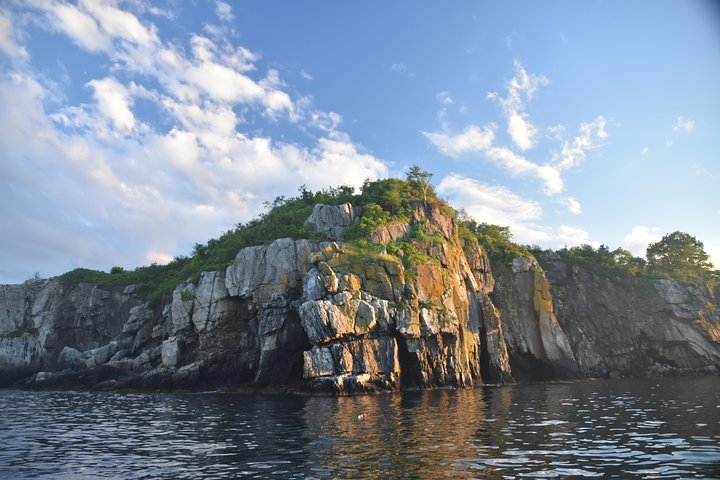
Casco Bay
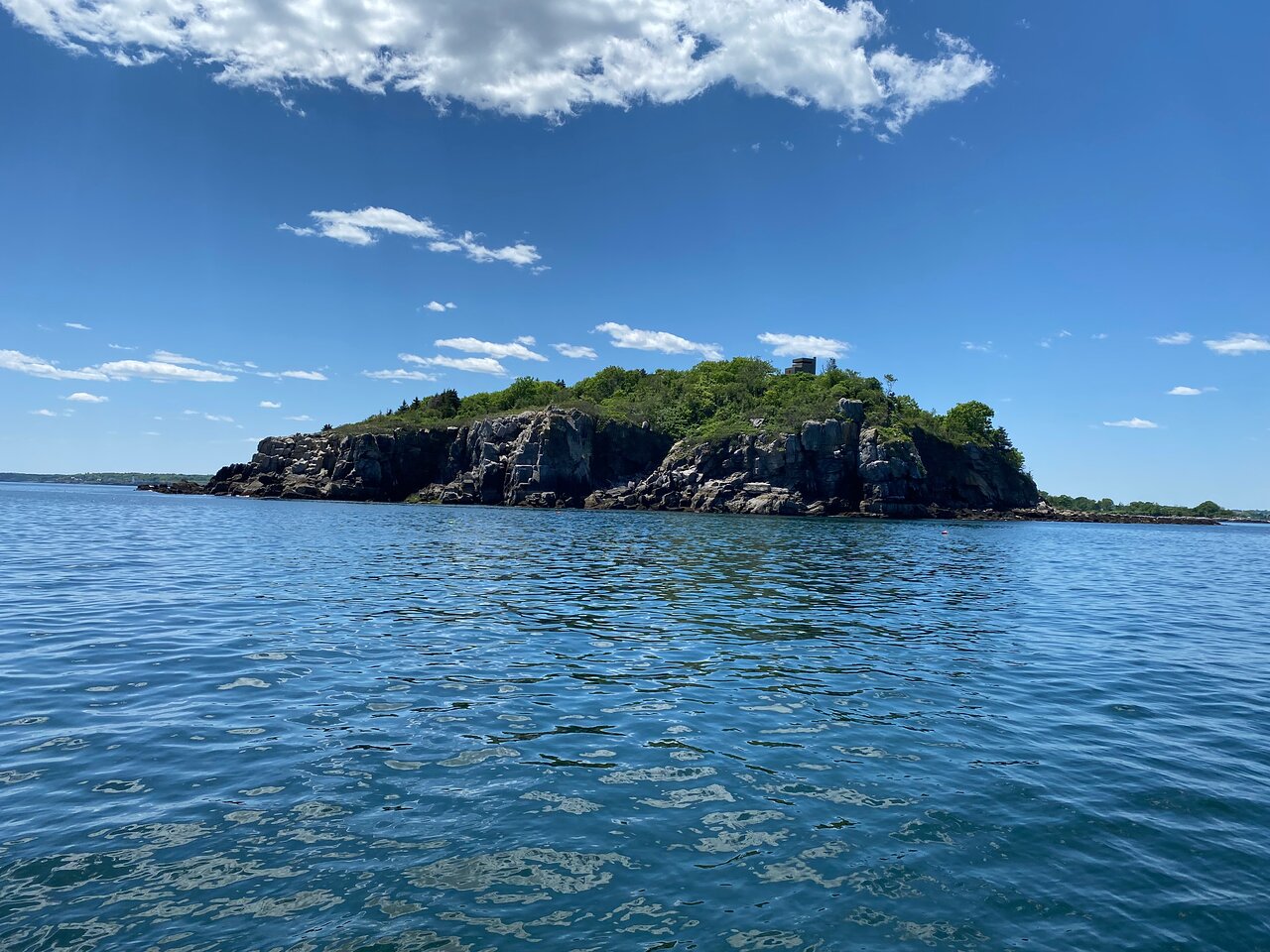
Casco Bay is world-renown for its rugged islands, protected waters, and fantastic scenery. Cruise past some of the bay's 200+ islands boasting tree-covered rocky cliffs, small fishing communities, and cute harbors.
7
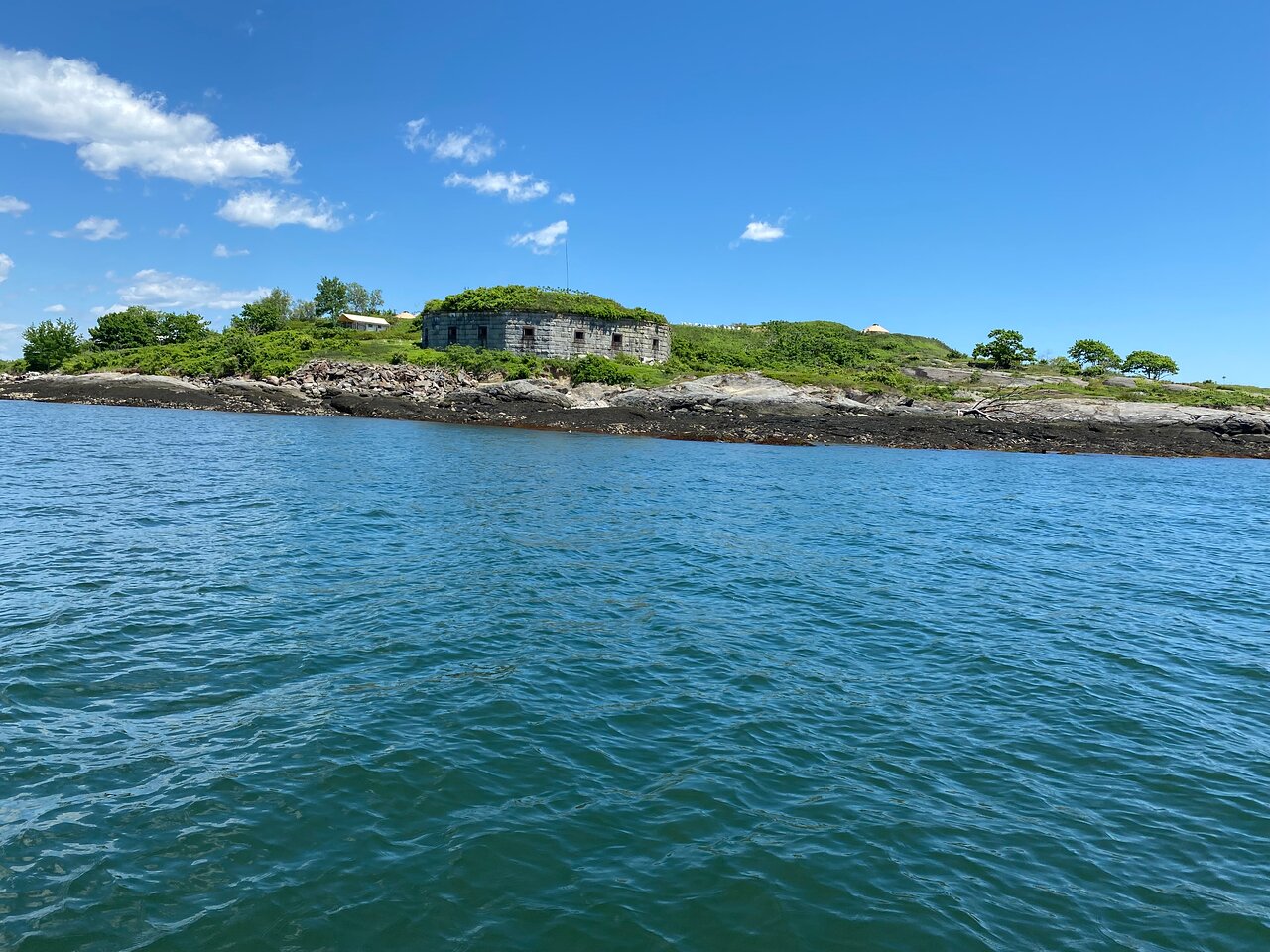
Fort Gorges
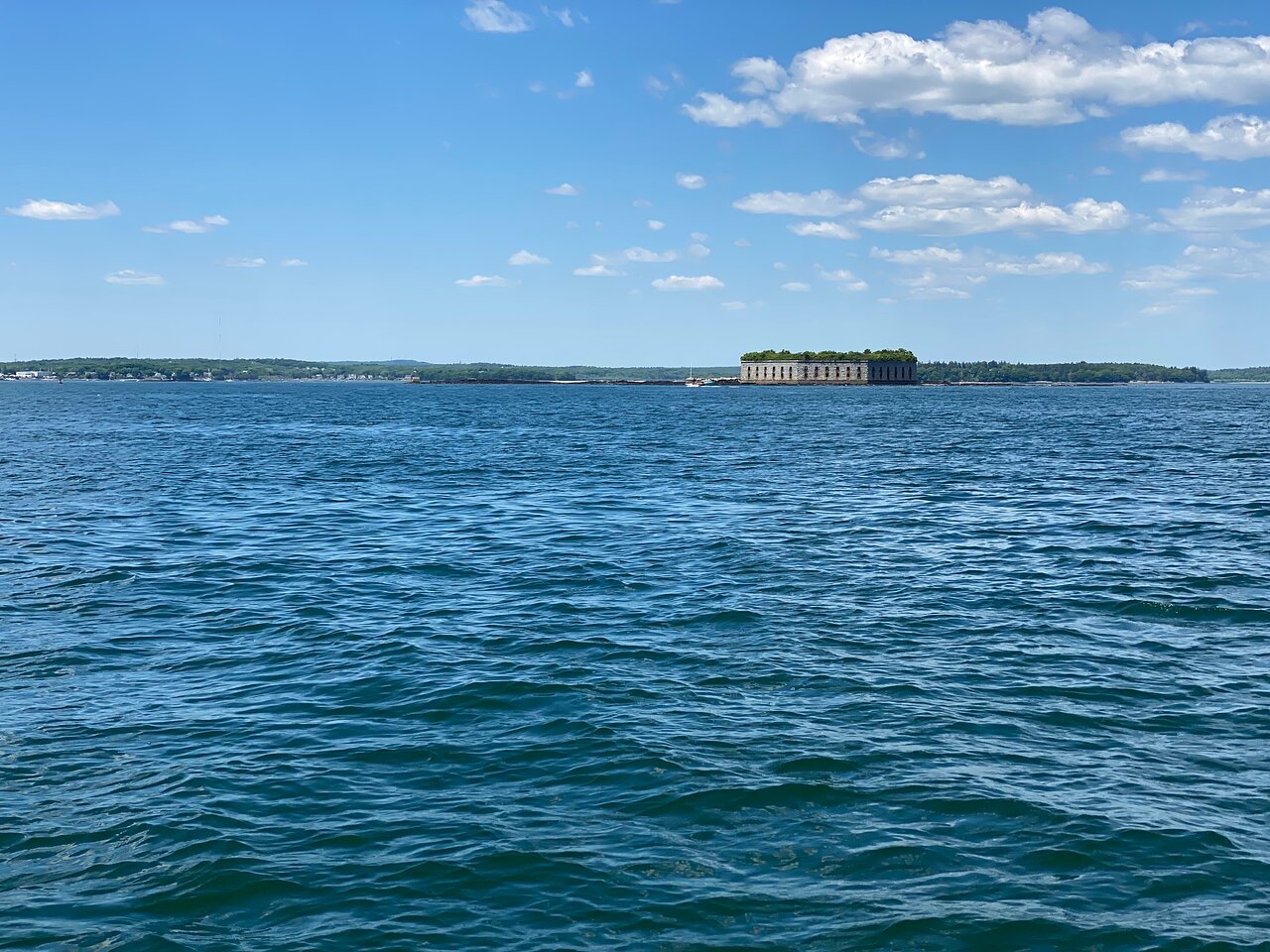
As the most conspicuous stone fortress protecting Portland Harbor, Fort Gorges is a landmark visible from much of Casco Bay, which is exactly why it was built on this rocky outcropping a short distance from Peaks and Little Diamond Islands and the mainland itself. The fort could fire more than a dozen cannons on attackers coming from any possible sea route, but was never used in active battle. Technological advancements in artillery during the Civil War rendered it too vulnerable to be useful. The fort did serve as a storage facility for the army during World War II, when underwater mines, electromagnetic sensing cables, and other systems were used to help protect Portland and Casco Bay from German attack. Remember, Portland was home to a large shipyard during WWII and was the start of a pipeline that supplies oil to Montreal and eastern Canada, so the region was of high strategic importance even in more modern conflicts.
8
Peaks Island
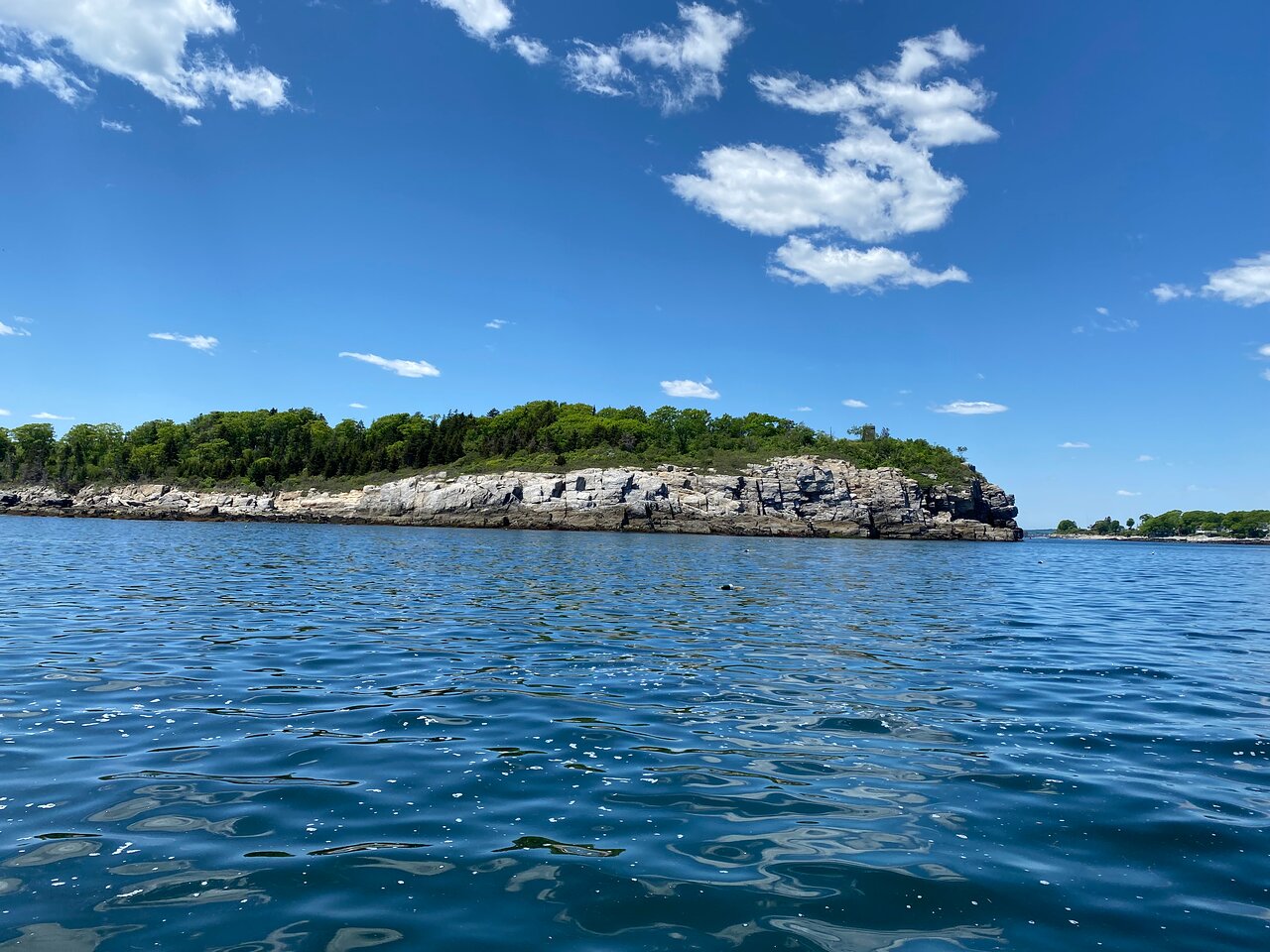
Enjoy fantastic views of the scenic cliffs on Cushing Island and the tree-lined streets and quaint cottages of Peaks Island. Once home to several amusement parks that were served by direct steamer routes from New York, Peaks is now a quiet island neighborhood that is technically part of the City of Portland but has a small-town feel all its own. By the time the fall colors are in full view, most seasonal residents have returned to their usual homes, and Peaks is home to just a couple hundred hearty year round souls who must take a ferry or water taxi to get to the mainland.
9
Portland
Board M/V MONHEGAN, a beautifully restored wooden lobster boat, and make yourself at home as you cruise through Portland's Harbor, past wharves dating to the period just after the Revolutionary War. At one point, Portland was one of the busiest harbors in the early decades of the United States, a fact attested to by the incredible stone fortresses protecting the harbor.
10
Bug Light Park
Marking the entrance to Portland Harbor, this small lighthouse is typically the first of four lighthouses we see on our sightseeing excursions aboard our vintage wooden boats.
11
Spring Point Ledge Lighthouse
Get up close to Spring Point Light and nearby Fort Preble, a small gun emplacement built as a part of Portland's Harbor Defenses. In the early years, the lighthouse was not connected to the mainland by the granite breakwater that exists today, and ships that went on the wrong side of the lighthouse went aground on shallow ledge.
12
Portland Head Light
See Maine's most iconic lighthouse from the water. Weather and sea conditions permitting, we spend time in the waters in front of the lighthouse for photos and discussion about the history of the lighthouse. We do not go ashore or tour the lighthouse. Lighthouse is not open for tours as it is still an active navigational beacon.
13
Ram Island Ledge Light
Marking the opposite side of the harbor channel from Portland Head Light, Ram Island Light sits atop a rocky ledge and at high tide appears to be floating and completely unattached to land. Whereas Portland Head Light has its stately keeper's house and beautiful white washed sides, Ram Island Light is weathered and gray almost inaccessible, with a now-derelict pier leading to a ladder that requires one to climb up 30 feet on the outside of the lighthouse before you get to the door.
14
Casco Bay
Casco Bay is world-renown for its rugged islands, protected waters, and fantastic scenery. Cruise past some of the bay's 200+ islands boasting tree-covered rocky cliffs, small fishing communities, and cute harbors.
15
Fort Gorges
As the most conspicuous stone fortress protecting Portland Harbor, Fort Gorges is a landmark visible from much of Casco Bay, which is exactly why it was built on this rocky outcropping a short distance from Peaks and Little Diamond Islands and the mainland itself. The fort could fire more than a dozen cannons on attackers coming from any possible sea route, but was never used in active battle. Technological advancements in artillery during the Civil War rendered it too vulnerable to be useful. The fort did serve as a storage facility for the army during World War II, when underwater mines, electromagnetic sensing cables, and other systems were used to help protect Portland and Casco Bay from German attack. Remember, Portland was home to a large shipyard during WWII and was the start of a pipeline that supplies oil to Montreal and eastern Canada, so the region was of high strategic importance even in more modern conflicts.
16
Peaks Island
Enjoy fantastic views of the scenic cliffs on Cushing Island and the tree-lined streets and quaint cottages of Peaks Island. Once home to several amusement parks that were served by direct steamer routes from New York, Peaks is now a quiet island neighborhood that is technically part of the City of Portland but has a small-town feel all its own. By the time the fall colors are in full view, most seasonal residents have returned to their usual homes, and Peaks is home to just a couple hundred hearty year round souls who must take a ferry or water taxi to get to the mainland.
17
Portland
Board M/V MONHEGAN, a beautifully restored wooden lobster boat, and make yourself at home as you cruise through Portland's Harbor, past wharves dating to the period just after the Revolutionary War. At one point, Portland was one of the busiest harbors in the early decades of the United States, a fact attested to by the incredible stone fortresses protecting the harbor.
18
Bug Light Park
Marking the entrance to Portland Harbor, this small lighthouse is typically the first of four lighthouses we see on our sightseeing excursions aboard our vintage wooden boats.
19
Spring Point Ledge Lighthouse
Get up close to Spring Point Light and nearby Fort Preble, a small gun emplacement built as a part of Portland's Harbor Defenses. In the early years, the lighthouse was not connected to the mainland by the granite breakwater that exists today, and ships that went on the wrong side of the lighthouse went aground on shallow ledge.
20
Portland Head Light
See Maine's most iconic lighthouse from the water. Weather and sea conditions permitting, we spend time in the waters in front of the lighthouse for photos and discussion about the history of the lighthouse. We do not go ashore or tour the lighthouse. Lighthouse is not open for tours as it is still an active navigational beacon.
21
Ram Island Ledge Light
Marking the opposite side of the harbor channel from Portland Head Light, Ram Island Light sits atop a rocky ledge and at high tide appears to be floating and completely unattached to land. Whereas Portland Head Light has its stately keeper's house and beautiful white washed sides, Ram Island Light is weathered and gray almost inaccessible, with a now-derelict pier leading to a ladder that requires one to climb up 30 feet on the outside of the lighthouse before you get to the door.
22
Casco Bay
Casco Bay is world-renown for its rugged islands, protected waters, and fantastic scenery. Cruise past some of the bay's 200+ islands boasting tree-covered rocky cliffs, small fishing communities, and cute harbors.
23
Fort Gorges
As the most conspicuous stone fortress protecting Portland Harbor, Fort Gorges is a landmark visible from much of Casco Bay, which is exactly why it was built on this rocky outcropping a short distance from Peaks and Little Diamond Islands and the mainland itself. The fort could fire more than a dozen cannons on attackers coming from any possible sea route, but was never used in active battle. Technological advancements in artillery during the Civil War rendered it too vulnerable to be useful. The fort did serve as a storage facility for the army during World War II, when underwater mines, electromagnetic sensing cables, and other systems were used to help protect Portland and Casco Bay from German attack. Remember, Portland was home to a large shipyard during WWII and was the start of a pipeline that supplies oil to Montreal and eastern Canada, so the region was of high strategic importance even in more modern conflicts.
24
Peaks Island
Enjoy fantastic views of the scenic cliffs on Cushing Island and the tree-lined streets and quaint cottages of Peaks Island. Once home to several amusement parks that were served by direct steamer routes from New York, Peaks is now a quiet island neighborhood that is technically part of the City of Portland but has a small-town feel all its own. By the time the fall colors are in full view, most seasonal residents have returned to their usual homes, and Peaks is home to just a couple hundred hearty year round souls who must take a ferry or water taxi to get to the mainland.
25
Portland
Board M/V MONHEGAN, a beautifully restored wooden lobster boat, and make yourself at home as you cruise through Portland's Harbor, past wharves dating to the period just after the Revolutionary War. At one point, Portland was one of the busiest harbors in the early decades of the United States, a fact attested to by the incredible stone fortresses protecting the harbor.
26
Bug Light Park
Marking the entrance to Portland Harbor, this small lighthouse is typically the first of four lighthouses we see on our sightseeing excursions aboard our vintage wooden boats.
27
Spring Point Ledge Lighthouse
Get up close to Spring Point Light and nearby Fort Preble, a small gun emplacement built as a part of Portland's Harbor Defenses. In the early years, the lighthouse was not connected to the mainland by the granite breakwater that exists today, and ships that went on the wrong side of the lighthouse went aground on shallow ledge.
28
Portland Head Light
See Maine's most iconic lighthouse from the water. Weather and sea conditions permitting, we spend time in the waters in front of the lighthouse for photos and discussion about the history of the lighthouse. We do not go ashore or tour the lighthouse. Lighthouse is not open for tours as it is still an active navigational beacon.
29
Ram Island Ledge Light
Marking the opposite side of the harbor channel from Portland Head Light, Ram Island Light sits atop a rocky ledge and at high tide appears to be floating and completely unattached to land. Whereas Portland Head Light has its stately keeper's house and beautiful white washed sides, Ram Island Light is weathered and gray almost inaccessible, with a now-derelict pier leading to a ladder that requires one to climb up 30 feet on the outside of the lighthouse before you get to the door.
30
Casco Bay
Casco Bay is world-renown for its rugged islands, protected waters, and fantastic scenery. Cruise past some of the bay's 200+ islands boasting tree-covered rocky cliffs, small fishing communities, and cute harbors.
31
Fort Gorges
As the most conspicuous stone fortress protecting Portland Harbor, Fort Gorges is a landmark visible from much of Casco Bay, which is exactly why it was built on this rocky outcropping a short distance from Peaks and Little Diamond Islands and the mainland itself. The fort could fire more than a dozen cannons on attackers coming from any possible sea route, but was never used in active battle. Technological advancements in artillery during the Civil War rendered it too vulnerable to be useful. The fort did serve as a storage facility for the army during World War II, when underwater mines, electromagnetic sensing cables, and other systems were used to help protect Portland and Casco Bay from German attack. Remember, Portland was home to a large shipyard during WWII and was the start of a pipeline that supplies oil to Montreal and eastern Canada, so the region was of high strategic importance even in more modern conflicts.
32
Peaks Island
Enjoy fantastic views of the scenic cliffs on Cushing Island and the tree-lined streets and quaint cottages of Peaks Island. Once home to several amusement parks that were served by direct steamer routes from New York, Peaks is now a quiet island neighborhood that is technically part of the City of Portland but has a small-town feel all its own. By the time the fall colors are in full view, most seasonal residents have returned to their usual homes, and Peaks is home to just a couple hundred hearty year round souls who must take a ferry or water taxi to get to the mainland.
33
Portland
Board M/V MONHEGAN, a beautifully restored wooden lobster boat, and make yourself at home as you cruise through Portland's Harbor, past wharves dating to the period just after the Revolutionary War. At one point, Portland was one of the busiest harbors in the early decades of the United States, a fact attested to by the incredible stone fortresses protecting the harbor.
34
Bug Light Park
Marking the entrance to Portland Harbor, this small lighthouse is typically the first of four lighthouses we see on our sightseeing excursions aboard our vintage wooden boats.
35
Spring Point Ledge Lighthouse
Get up close to Spring Point Light and nearby Fort Preble, a small gun emplacement built as a part of Portland's Harbor Defenses. In the early years, the lighthouse was not connected to the mainland by the granite breakwater that exists today, and ships that went on the wrong side of the lighthouse went aground on shallow ledge.
36
Portland Head Light
See Maine's most iconic lighthouse from the water. Weather and sea conditions permitting, we spend time in the waters in front of the lighthouse for photos and discussion about the history of the lighthouse. We do not go ashore or tour the lighthouse. Lighthouse is not open for tours as it is still an active navigational beacon.
37
Ram Island Ledge Light
Marking the opposite side of the harbor channel from Portland Head Light, Ram Island Light sits atop a rocky ledge and at high tide appears to be floating and completely unattached to land. Whereas Portland Head Light has its stately keeper's house and beautiful white washed sides, Ram Island Light is weathered and gray almost inaccessible, with a now-derelict pier leading to a ladder that requires one to climb up 30 feet on the outside of the lighthouse before you get to the door.
38
Casco Bay
Casco Bay is world-renown for its rugged islands, protected waters, and fantastic scenery. Cruise past some of the bay's 200+ islands boasting tree-covered rocky cliffs, small fishing communities, and cute harbors.
39
Fort Gorges
As the most conspicuous stone fortress protecting Portland Harbor, Fort Gorges is a landmark visible from much of Casco Bay, which is exactly why it was built on this rocky outcropping a short distance from Peaks and Little Diamond Islands and the mainland itself. The fort could fire more than a dozen cannons on attackers coming from any possible sea route, but was never used in active battle. Technological advancements in artillery during the Civil War rendered it too vulnerable to be useful. The fort did serve as a storage facility for the army during World War II, when underwater mines, electromagnetic sensing cables, and other systems were used to help protect Portland and Casco Bay from German attack. Remember, Portland was home to a large shipyard during WWII and was the start of a pipeline that supplies oil to Montreal and eastern Canada, so the region was of high strategic importance even in more modern conflicts.
40
Peaks Island
Enjoy fantastic views of the scenic cliffs on Cushing Island and the tree-lined streets and quaint cottages of Peaks Island. Once home to several amusement parks that were served by direct steamer routes from New York, Peaks is now a quiet island neighborhood that is technically part of the City of Portland but has a small-town feel all its own. By the time the fall colors are in full view, most seasonal residents have returned to their usual homes, and Peaks is home to just a couple hundred hearty year round souls who must take a ferry or water taxi to get to the mainland.
41
Portland
Montez à bord du M/V MONHEGAN, un homardier en bois magnifiquement restauré, et faites comme chez vous en naviguant dans le port de Portland, en passant devant des quais datant de la période juste après la guerre d'indépendance. À un moment donné, Portland était l'un des ports les plus fréquentés des premières décennies des États-Unis, un fait attesté par les incroyables forteresses de pierre protégeant le port.
42
Parc Bug Light
Marquant l'entrée du port de Portland, ce petit phare est généralement le premier des quatre phares que nous voyons lors de nos excursions touristiques à bord de nos bateaux en bois d'époque.
43
Phare de Spring Point Ledge
Approchez-vous de Spring Point Light et de Fort Preble, un petit emplacement de canon construit dans le cadre des défenses du port de Portland. Dans les premières années, le phare n'était pas relié au continent par le brise-lames en granit qui existe aujourd'hui, et les navires qui allaient du mauvais côté du phare s'échouaient sur une corniche peu profonde.
44
Phare Portland
Découvrez le phare le plus emblématique du Maine depuis l'eau. Si les conditions météorologiques et maritimes le permettent, nous passons du temps dans les eaux devant le phare pour prendre des photos et discuter de l'histoire du phare. Nous n'allons pas à terre ni ne visitons le phare. Le phare n'est pas ouvert aux visites car il s'agit toujours d'une balise de navigation active.
45
Lampe de rebord Ram Island
Marquant le côté opposé du chenal du port par rapport au phare de Portland Head, le phare de Ram Island se trouve au sommet d'un rebord rocheux et, à marée haute, semble flotter et ne pas être attaché à la terre. Alors que Portland Head Light a sa majestueuse maison de gardien et de beaux côtés blanchis à la chaux, Ram Island Light est patiné et gris presque inaccessible, avec une jetée maintenant abandonnée menant à une échelle qui oblige à grimper 30 pieds à l'extérieur du phare avant vous arrivez à la porte.
46
Baie de Casco
Casco Bay est mondialement connue pour ses îles accidentées, ses eaux protégées et ses paysages fantastiques. Passez devant quelques-unes des plus de 200 îles de la baie avec des falaises rocheuses couvertes d'arbres, de petites communautés de pêcheurs et de jolis ports.
47
Gorges du fort
En tant que forteresse de pierre la plus visible protégeant le port de Portland, Fort Gorges est un point de repère visible depuis une grande partie de la baie de Casco, c'est exactement pourquoi il a été construit sur cet affleurement rocheux à une courte distance de Peaks et Little Diamond Islands et du continent lui-même. Le fort pouvait tirer plus d'une douzaine de canons sur des attaquants venant de n'importe quelle route maritime possible, mais n'a jamais été utilisé dans une bataille active. Les progrès technologiques de l'artillerie pendant la guerre civile l'ont rendu trop vulnérable pour être utile. Le fort a servi d'installation de stockage pour l'armée pendant la Seconde Guerre mondiale, lorsque des mines sous-marines, des câbles de détection électromagnétiques et d'autres systèmes ont été utilisés pour aider à protéger Portland et Casco Bay des attaques allemandes. Rappelez-vous, Portland abritait un grand chantier naval pendant la Seconde Guerre mondiale et était le début d'un oléoduc qui fournit du pétrole à Montréal et à l'est du Canada, de sorte que la région était d'une grande importance stratégique même dans les conflits plus modernes.
48
Île des pics
Profitez d'une vue fantastique sur les falaises pittoresques de Cushing Island et sur les rues bordées d'arbres et les cottages pittoresques de Peaks Island. Abritant autrefois plusieurs parcs d'attractions desservis par des lignes directes de bateaux à vapeur depuis New York, Peaks est maintenant un quartier insulaire calme qui fait techniquement partie de la ville de Portland, mais qui a une atmosphère de petite ville qui lui est propre. Au moment où les couleurs de l'automne sont pleinement visibles, la plupart des résidents saisonniers sont retournés dans leurs maisons habituelles, et Peaks n'abrite que quelques centaines d'âmes chaleureuses toute l'année qui doivent prendre un ferry ou un bateau-taxi pour se rendre sur le continent.
49
Portland
Board M/V MONHEGAN, a beautifully restored wooden lobster boat, and make yourself at home as you cruise through Portland's Harbor, past wharves dating to the period just after the Revolutionary War. At one point, Portland was one of the busiest harbors in the early decades of the United States, a fact attested to by the incredible stone fortresses protecting the harbor.
50
Bug Light Park
Marking the entrance to Portland Harbor, this small lighthouse is typically the first of four lighthouses we see on our sightseeing excursions aboard our vintage wooden boats.
51
Spring Point Ledge Lighthouse
Get up close to Spring Point Light and nearby Fort Preble, a small gun emplacement built as a part of Portland's Harbor Defenses. In the early years, the lighthouse was not connected to the mainland by the granite breakwater that exists today, and ships that went on the wrong side of the lighthouse went aground on shallow ledge.
52
Portland Head Light
See Maine's most iconic lighthouse from the water. Weather and sea conditions permitting, we spend time in the waters in front of the lighthouse for photos and discussion about the history of the lighthouse. We do not go ashore or tour the lighthouse. Lighthouse is not open for tours as it is still an active navigational beacon.
53
Ram Island Ledge Light
Marking the opposite side of the harbor channel from Portland Head Light, Ram Island Light sits atop a rocky ledge and at high tide appears to be floating and completely unattached to land. Whereas Portland Head Light has its stately keeper's house and beautiful white washed sides, Ram Island Light is weathered and gray almost inaccessible, with a now-derelict pier leading to a ladder that requires one to climb up 30 feet on the outside of the lighthouse before you get to the door.
54
Casco Bay
Casco Bay is world-renown for its rugged islands, protected waters, and fantastic scenery. Cruise past some of the bay's 200+ islands boasting tree-covered rocky cliffs, small fishing communities, and cute harbors.
55
Fort Gorges
As the most conspicuous stone fortress protecting Portland Harbor, Fort Gorges is a landmark visible from much of Casco Bay, which is exactly why it was built on this rocky outcropping a short distance from Peaks and Little Diamond Islands and the mainland itself. The fort could fire more than a dozen cannons on attackers coming from any possible sea route, but was never used in active battle. Technological advancements in artillery during the Civil War rendered it too vulnerable to be useful. The fort did serve as a storage facility for the army during World War II, when underwater mines, electromagnetic sensing cables, and other systems were used to help protect Portland and Casco Bay from German attack. Remember, Portland was home to a large shipyard during WWII and was the start of a pipeline that supplies oil to Montreal and eastern Canada, so the region was of high strategic importance even in more modern conflicts.
56
Peaks Island
Enjoy fantastic views of the scenic cliffs on Cushing Island and the tree-lined streets and quaint cottages of Peaks Island. Once home to several amusement parks that were served by direct steamer routes from New York, Peaks is now a quiet island neighborhood that is technically part of the City of Portland but has a small-town feel all its own. By the time the fall colors are in full view, most seasonal residents have returned to their usual homes, and Peaks is home to just a couple hundred hearty year round souls who must take a ferry or water taxi to get to the mainland.
57
Portland
Board M/V MONHEGAN, a beautifully restored wooden lobster boat, and make yourself at home as you cruise through Portland's Harbor, past wharves dating to the period just after the Revolutionary War. At one point, Portland was one of the busiest harbors in the early decades of the United States, a fact attested to by the incredible stone fortresses protecting the harbor.
58
Bug Light Park
Marking the entrance to Portland Harbor, this small lighthouse is typically the first of four lighthouses we see on our sightseeing excursions aboard our vintage wooden boats.
59
Spring Point Ledge Lighthouse
Get up close to Spring Point Light and nearby Fort Preble, a small gun emplacement built as a part of Portland's Harbor Defenses. In the early years, the lighthouse was not connected to the mainland by the granite breakwater that exists today, and ships that went on the wrong side of the lighthouse went aground on shallow ledge.
60
Portland Head Light
See Maine's most iconic lighthouse from the water. Weather and sea conditions permitting, we spend time in the waters in front of the lighthouse for photos and discussion about the history of the lighthouse. We do not go ashore or tour the lighthouse. Lighthouse is not open for tours as it is still an active navigational beacon.
61
Ram Island Ledge Light
Marking the opposite side of the harbor channel from Portland Head Light, Ram Island Light sits atop a rocky ledge and at high tide appears to be floating and completely unattached to land. Whereas Portland Head Light has its stately keeper's house and beautiful white washed sides, Ram Island Light is weathered and gray almost inaccessible, with a now-derelict pier leading to a ladder that requires one to climb up 30 feet on the outside of the lighthouse before you get to the door.
62
Casco Bay
Casco Bay is world-renown for its rugged islands, protected waters, and fantastic scenery. Cruise past some of the bay's 200+ islands boasting tree-covered rocky cliffs, small fishing communities, and cute harbors.
63
Fort Gorges
As the most conspicuous stone fortress protecting Portland Harbor, Fort Gorges is a landmark visible from much of Casco Bay, which is exactly why it was built on this rocky outcropping a short distance from Peaks and Little Diamond Islands and the mainland itself. The fort could fire more than a dozen cannons on attackers coming from any possible sea route, but was never used in active battle. Technological advancements in artillery during the Civil War rendered it too vulnerable to be useful. The fort did serve as a storage facility for the army during World War II, when underwater mines, electromagnetic sensing cables, and other systems were used to help protect Portland and Casco Bay from German attack. Remember, Portland was home to a large shipyard during WWII and was the start of a pipeline that supplies oil to Montreal and eastern Canada, so the region was of high strategic importance even in more modern conflicts.
64
Peaks Island
Enjoy fantastic views of the scenic cliffs on Cushing Island and the tree-lined streets and quaint cottages of Peaks Island. Once home to several amusement parks that were served by direct steamer routes from New York, Peaks is now a quiet island neighborhood that is technically part of the City of Portland but has a small-town feel all its own. By the time the fall colors are in full view, most seasonal residents have returned to their usual homes, and Peaks is home to just a couple hundred hearty year round souls who must take a ferry or water taxi to get to the mainland.
65
Portland
Board M/V MONHEGAN, a beautifully restored wooden lobster boat, and make yourself at home as you cruise through Portland's Harbor, past wharves dating to the period just after the Revolutionary War. At one point, Portland was one of the busiest harbors in the early decades of the United States, a fact attested to by the incredible stone fortresses protecting the harbor.
66
Bug Light Park
Marking the entrance to Portland Harbor, this small lighthouse is typically the first of four lighthouses we see on our sightseeing excursions aboard our vintage wooden boats.
67
Spring Point Ledge Lighthouse
Get up close to Spring Point Light and nearby Fort Preble, a small gun emplacement built as a part of Portland's Harbor Defenses. In the early years, the lighthouse was not connected to the mainland by the granite breakwater that exists today, and ships that went on the wrong side of the lighthouse went aground on shallow ledge.
68
Portland Head Light
See Maine's most iconic lighthouse from the water. Weather and sea conditions permitting, we spend time in the waters in front of the lighthouse for photos and discussion about the history of the lighthouse. We do not go ashore or tour the lighthouse. Lighthouse is not open for tours as it is still an active navigational beacon.
69
Ram Island Ledge Light
Marking the opposite side of the harbor channel from Portland Head Light, Ram Island Light sits atop a rocky ledge and at high tide appears to be floating and completely unattached to land. Whereas Portland Head Light has its stately keeper's house and beautiful white washed sides, Ram Island Light is weathered and gray almost inaccessible, with a now-derelict pier leading to a ladder that requires one to climb up 30 feet on the outside of the lighthouse before you get to the door.
70
Casco Bay
Casco Bay is world-renown for its rugged islands, protected waters, and fantastic scenery. Cruise past some of the bay's 200+ islands boasting tree-covered rocky cliffs, small fishing communities, and cute harbors.
71
Fort Gorges
As the most conspicuous stone fortress protecting Portland Harbor, Fort Gorges is a landmark visible from much of Casco Bay, which is exactly why it was built on this rocky outcropping a short distance from Peaks and Little Diamond Islands and the mainland itself. The fort could fire more than a dozen cannons on attackers coming from any possible sea route, but was never used in active battle. Technological advancements in artillery during the Civil War rendered it too vulnerable to be useful. The fort did serve as a storage facility for the army during World War II, when underwater mines, electromagnetic sensing cables, and other systems were used to help protect Portland and Casco Bay from German attack. Remember, Portland was home to a large shipyard during WWII and was the start of a pipeline that supplies oil to Montreal and eastern Canada, so the region was of high strategic importance even in more modern conflicts.
72
Peaks Island
Enjoy fantastic views of the scenic cliffs on Cushing Island and the tree-lined streets and quaint cottages of Peaks Island. Once home to several amusement parks that were served by direct steamer routes from New York, Peaks is now a quiet island neighborhood that is technically part of the City of Portland but has a small-town feel all its own. By the time the fall colors are in full view, most seasonal residents have returned to their usual homes, and Peaks is home to just a couple hundred hearty year round souls who must take a ferry or water taxi to get to the mainland.
73
Portland
Board M/V MONHEGAN, a beautifully restored wooden lobster boat, and make yourself at home as you cruise through Portland's Harbor, past wharves dating to the period just after the Revolutionary War. At one point, Portland was one of the busiest harbors in the early decades of the United States, a fact attested to by the incredible stone fortresses protecting the harbor.
74
Bug Light Park
Marking the entrance to Portland Harbor, this small lighthouse is typically the first of four lighthouses we see on our sightseeing excursions aboard our vintage wooden boats.
75
Spring Point Ledge Lighthouse
Get up close to Spring Point Light and nearby Fort Preble, a small gun emplacement built as a part of Portland's Harbor Defenses. In the early years, the lighthouse was not connected to the mainland by the granite breakwater that exists today, and ships that went on the wrong side of the lighthouse went aground on shallow ledge.
76
Portland Head Light
See Maine's most iconic lighthouse from the water. Weather and sea conditions permitting, we spend time in the waters in front of the lighthouse for photos and discussion about the history of the lighthouse. We do not go ashore or tour the lighthouse. Lighthouse is not open for tours as it is still an active navigational beacon.
77
Ram Island Ledge Light
Marking the opposite side of the harbor channel from Portland Head Light, Ram Island Light sits atop a rocky ledge and at high tide appears to be floating and completely unattached to land. Whereas Portland Head Light has its stately keeper's house and beautiful white washed sides, Ram Island Light is weathered and gray almost inaccessible, with a now-derelict pier leading to a ladder that requires one to climb up 30 feet on the outside of the lighthouse before you get to the door.
78
Casco Bay
Casco Bay is world-renown for its rugged islands, protected waters, and fantastic scenery. Cruise past some of the bay's 200+ islands boasting tree-covered rocky cliffs, small fishing communities, and cute harbors.
79
Fort Gorges
As the most conspicuous stone fortress protecting Portland Harbor, Fort Gorges is a landmark visible from much of Casco Bay, which is exactly why it was built on this rocky outcropping a short distance from Peaks and Little Diamond Islands and the mainland itself. The fort could fire more than a dozen cannons on attackers coming from any possible sea route, but was never used in active battle. Technological advancements in artillery during the Civil War rendered it too vulnerable to be useful. The fort did serve as a storage facility for the army during World War II, when underwater mines, electromagnetic sensing cables, and other systems were used to help protect Portland and Casco Bay from German attack. Remember, Portland was home to a large shipyard during WWII and was the start of a pipeline that supplies oil to Montreal and eastern Canada, so the region was of high strategic importance even in more modern conflicts.
80
Peaks Island
Enjoy fantastic views of the scenic cliffs on Cushing Island and the tree-lined streets and quaint cottages of Peaks Island. Once home to several amusement parks that were served by direct steamer routes from New York, Peaks is now a quiet island neighborhood that is technically part of the City of Portland but has a small-town feel all its own. By the time the fall colors are in full view, most seasonal residents have returned to their usual homes, and Peaks is home to just a couple hundred hearty year round souls who must take a ferry or water taxi to get to the mainland.
81
Portland
Board M/V MONHEGAN, a beautifully restored wooden lobster boat, and make yourself at home as you cruise through Portland's Harbor, past wharves dating to the period just after the Revolutionary War. At one point, Portland was one of the busiest harbors in the early decades of the United States, a fact attested to by the incredible stone fortresses protecting the harbor.
82
Bug Light Park
Marking the entrance to Portland Harbor, this small lighthouse is typically the first of four lighthouses we see on our sightseeing excursions aboard our vintage wooden boats.
83
Spring Point Ledge Lighthouse
Get up close to Spring Point Light and nearby Fort Preble, a small gun emplacement built as a part of Portland's Harbor Defenses. In the early years, the lighthouse was not connected to the mainland by the granite breakwater that exists today, and ships that went on the wrong side of the lighthouse went aground on shallow ledge.
84
Portland Head Light
See Maine's most iconic lighthouse from the water. Weather and sea conditions permitting, we spend time in the waters in front of the lighthouse for photos and discussion about the history of the lighthouse. We do not go ashore or tour the lighthouse. Lighthouse is not open for tours as it is still an active navigational beacon.
85
Ram Island Ledge Light
Marking the opposite side of the harbor channel from Portland Head Light, Ram Island Light sits atop a rocky ledge and at high tide appears to be floating and completely unattached to land. Whereas Portland Head Light has its stately keeper's house and beautiful white washed sides, Ram Island Light is weathered and gray almost inaccessible, with a now-derelict pier leading to a ladder that requires one to climb up 30 feet on the outside of the lighthouse before you get to the door.
86
Casco Bay
Casco Bay is world-renown for its rugged islands, protected waters, and fantastic scenery. Cruise past some of the bay's 200+ islands boasting tree-covered rocky cliffs, small fishing communities, and cute harbors.
87
Fort Gorges
As the most conspicuous stone fortress protecting Portland Harbor, Fort Gorges is a landmark visible from much of Casco Bay, which is exactly why it was built on this rocky outcropping a short distance from Peaks and Little Diamond Islands and the mainland itself. The fort could fire more than a dozen cannons on attackers coming from any possible sea route, but was never used in active battle. Technological advancements in artillery during the Civil War rendered it too vulnerable to be useful. The fort did serve as a storage facility for the army during World War II, when underwater mines, electromagnetic sensing cables, and other systems were used to help protect Portland and Casco Bay from German attack. Remember, Portland was home to a large shipyard during WWII and was the start of a pipeline that supplies oil to Montreal and eastern Canada, so the region was of high strategic importance even in more modern conflicts.
88
Peaks Island
Enjoy fantastic views of the scenic cliffs on Cushing Island and the tree-lined streets and quaint cottages of Peaks Island. Once home to several amusement parks that were served by direct steamer routes from New York, Peaks is now a quiet island neighborhood that is technically part of the City of Portland but has a small-town feel all its own. By the time the fall colors are in full view, most seasonal residents have returned to their usual homes, and Peaks is home to just a couple hundred hearty year round souls who must take a ferry or water taxi to get to the mainland.
89
Portland
Board M/V MONHEGAN, a beautifully restored wooden lobster boat, and make yourself at home as you cruise through Portland's Harbor, past wharves dating to the period just after the Revolutionary War. At one point, Portland was one of the busiest harbors in the early decades of the United States, a fact attested to by the incredible stone fortresses protecting the harbor.
90
Bug Light Park
Marking the entrance to Portland Harbor, this small lighthouse is typically the first of four lighthouses we see on our sightseeing excursions aboard our vintage wooden boats.
91
Spring Point Ledge Lighthouse
Get up close to Spring Point Light and nearby Fort Preble, a small gun emplacement built as a part of Portland's Harbor Defenses. In the early years, the lighthouse was not connected to the mainland by the granite breakwater that exists today, and ships that went on the wrong side of the lighthouse went aground on shallow ledge.
92
Portland Head Light
See Maine's most iconic lighthouse from the water. Weather and sea conditions permitting, we spend time in the waters in front of the lighthouse for photos and discussion about the history of the lighthouse. We do not go ashore or tour the lighthouse. Lighthouse is not open for tours as it is still an active navigational beacon.
93
Ram Island Ledge Light
Marking the opposite side of the harbor channel from Portland Head Light, Ram Island Light sits atop a rocky ledge and at high tide appears to be floating and completely unattached to land. Whereas Portland Head Light has its stately keeper's house and beautiful white washed sides, Ram Island Light is weathered and gray almost inaccessible, with a now-derelict pier leading to a ladder that requires one to climb up 30 feet on the outside of the lighthouse before you get to the door.
94
Casco Bay
Casco Bay is world-renown for its rugged islands, protected waters, and fantastic scenery. Cruise past some of the bay's 200+ islands boasting tree-covered rocky cliffs, small fishing communities, and cute harbors.
95
Fort Gorges
As the most conspicuous stone fortress protecting Portland Harbor, Fort Gorges is a landmark visible from much of Casco Bay, which is exactly why it was built on this rocky outcropping a short distance from Peaks and Little Diamond Islands and the mainland itself. The fort could fire more than a dozen cannons on attackers coming from any possible sea route, but was never used in active battle. Technological advancements in artillery during the Civil War rendered it too vulnerable to be useful. The fort did serve as a storage facility for the army during World War II, when underwater mines, electromagnetic sensing cables, and other systems were used to help protect Portland and Casco Bay from German attack. Remember, Portland was home to a large shipyard during WWII and was the start of a pipeline that supplies oil to Montreal and eastern Canada, so the region was of high strategic importance even in more modern conflicts.
96
Peaks Island
Enjoy fantastic views of the scenic cliffs on Cushing Island and the tree-lined streets and quaint cottages of Peaks Island. Once home to several amusement parks that were served by direct steamer routes from New York, Peaks is now a quiet island neighborhood that is technically part of the City of Portland but has a small-town feel all its own. By the time the fall colors are in full view, most seasonal residents have returned to their usual homes, and Peaks is home to just a couple hundred hearty year round souls who must take a ferry or water taxi to get to the mainland.
97
Portland
Board M/V MONHEGAN, a beautifully restored wooden lobster boat, and make yourself at home as you cruise through Portland's Harbor, past wharves dating to the period just after the Revolutionary War. At one point, Portland was one of the busiest harbors in the early decades of the United States, a fact attested to by the incredible stone fortresses protecting the harbor.
98
Bug Light Park
Marking the entrance to Portland Harbor, this small lighthouse is typically the first of four lighthouses we see on our sightseeing excursions aboard our vintage wooden boats.
99
Spring Point Ledge Lighthouse
Get up close to Spring Point Light and nearby Fort Preble, a small gun emplacement built as a part of Portland's Harbor Defenses. In the early years, the lighthouse was not connected to the mainland by the granite breakwater that exists today, and ships that went on the wrong side of the lighthouse went aground on shallow ledge.
100
Portland Head Light
See Maine's most iconic lighthouse from the water. Weather and sea conditions permitting, we spend time in the waters in front of the lighthouse for photos and discussion about the history of the lighthouse. We do not go ashore or tour the lighthouse. Lighthouse is not open for tours as it is still an active navigational beacon.
101
Ram Island Ledge Light
Marking the opposite side of the harbor channel from Portland Head Light, Ram Island Light sits atop a rocky ledge and at high tide appears to be floating and completely unattached to land. Whereas Portland Head Light has its stately keeper's house and beautiful white washed sides, Ram Island Light is weathered and gray almost inaccessible, with a now-derelict pier leading to a ladder that requires one to climb up 30 feet on the outside of the lighthouse before you get to the door.
102
Casco Bay
Casco Bay is world-renown for its rugged islands, protected waters, and fantastic scenery. Cruise past some of the bay's 200+ islands boasting tree-covered rocky cliffs, small fishing communities, and cute harbors.
103
Fort Gorges
As the most conspicuous stone fortress protecting Portland Harbor, Fort Gorges is a landmark visible from much of Casco Bay, which is exactly why it was built on this rocky outcropping a short distance from Peaks and Little Diamond Islands and the mainland itself. The fort could fire more than a dozen cannons on attackers coming from any possible sea route, but was never used in active battle. Technological advancements in artillery during the Civil War rendered it too vulnerable to be useful. The fort did serve as a storage facility for the army during World War II, when underwater mines, electromagnetic sensing cables, and other systems were used to help protect Portland and Casco Bay from German attack. Remember, Portland was home to a large shipyard during WWII and was the start of a pipeline that supplies oil to Montreal and eastern Canada, so the region was of high strategic importance even in more modern conflicts.
104
Peaks Island
Enjoy fantastic views of the scenic cliffs on Cushing Island and the tree-lined streets and quaint cottages of Peaks Island. Once home to several amusement parks that were served by direct steamer routes from New York, Peaks is now a quiet island neighborhood that is technically part of the City of Portland but has a small-town feel all its own. By the time the fall colors are in full view, most seasonal residents have returned to their usual homes, and Peaks is home to just a couple hundred hearty year round souls who must take a ferry or water taxi to get to the mainland.
105
Portland
Board M/V MONHEGAN, a beautifully restored wooden lobster boat, and make yourself at home as you cruise through Portland's Harbor, past wharves dating to the period just after the Revolutionary War. At one point, Portland was one of the busiest harbors in the early decades of the United States, a fact attested to by the incredible stone fortresses protecting the harbor.
106
Bug Light Park
Marking the entrance to Portland Harbor, this small lighthouse is typically the first of four lighthouses we see on our sightseeing excursions aboard our vintage wooden boats.
107
Spring Point Ledge Lighthouse
Get up close to Spring Point Light and nearby Fort Preble, a small gun emplacement built as a part of Portland's Harbor Defenses. In the early years, the lighthouse was not connected to the mainland by the granite breakwater that exists today, and ships that went on the wrong side of the lighthouse went aground on shallow ledge.
108
Portland Head Light
See Maine's most iconic lighthouse from the water. Weather and sea conditions permitting, we spend time in the waters in front of the lighthouse for photos and discussion about the history of the lighthouse. We do not go ashore or tour the lighthouse. Lighthouse is not open for tours as it is still an active navigational beacon.
109
Ram Island Ledge Light
Marking the opposite side of the harbor channel from Portland Head Light, Ram Island Light sits atop a rocky ledge and at high tide appears to be floating and completely unattached to land. Whereas Portland Head Light has its stately keeper's house and beautiful white washed sides, Ram Island Light is weathered and gray almost inaccessible, with a now-derelict pier leading to a ladder that requires one to climb up 30 feet on the outside of the lighthouse before you get to the door.
110
Casco Bay
Casco Bay is world-renown for its rugged islands, protected waters, and fantastic scenery. Cruise past some of the bay's 200+ islands boasting tree-covered rocky cliffs, small fishing communities, and cute harbors.
111
Fort Gorges
As the most conspicuous stone fortress protecting Portland Harbor, Fort Gorges is a landmark visible from much of Casco Bay, which is exactly why it was built on this rocky outcropping a short distance from Peaks and Little Diamond Islands and the mainland itself. The fort could fire more than a dozen cannons on attackers coming from any possible sea route, but was never used in active battle. Technological advancements in artillery during the Civil War rendered it too vulnerable to be useful. The fort did serve as a storage facility for the army during World War II, when underwater mines, electromagnetic sensing cables, and other systems were used to help protect Portland and Casco Bay from German attack. Remember, Portland was home to a large shipyard during WWII and was the start of a pipeline that supplies oil to Montreal and eastern Canada, so the region was of high strategic importance even in more modern conflicts.
112
Peaks Island
Enjoy fantastic views of the scenic cliffs on Cushing Island and the tree-lined streets and quaint cottages of Peaks Island. Once home to several amusement parks that were served by direct steamer routes from New York, Peaks is now a quiet island neighborhood that is technically part of the City of Portland but has a small-town feel all its own. By the time the fall colors are in full view, most seasonal residents have returned to their usual homes, and Peaks is home to just a couple hundred hearty year round souls who must take a ferry or water taxi to get to the mainland.
113
Portland
Board M/V MONHEGAN, a beautifully restored wooden lobster boat, and make yourself at home as you cruise through Portland's Harbor, past wharves dating to the period just after the Revolutionary War. At one point, Portland was one of the busiest harbors in the early decades of the United States, a fact attested to by the incredible stone fortresses protecting the harbor.
114
Bug Light Park
Marking the entrance to Portland Harbor, this small lighthouse is typically the first of four lighthouses we see on our sightseeing excursions aboard our vintage wooden boats.
115
Spring Point Ledge Lighthouse
Get up close to Spring Point Light and nearby Fort Preble, a small gun emplacement built as a part of Portland's Harbor Defenses. In the early years, the lighthouse was not connected to the mainland by the granite breakwater that exists today, and ships that went on the wrong side of the lighthouse went aground on shallow ledge.
116
Portland Head Light
See Maine's most iconic lighthouse from the water. Weather and sea conditions permitting, we spend time in the waters in front of the lighthouse for photos and discussion about the history of the lighthouse. We do not go ashore or tour the lighthouse. Lighthouse is not open for tours as it is still an active navigational beacon.
117
Ram Island Ledge Light
Marking the opposite side of the harbor channel from Portland Head Light, Ram Island Light sits atop a rocky ledge and at high tide appears to be floating and completely unattached to land. Whereas Portland Head Light has its stately keeper's house and beautiful white washed sides, Ram Island Light is weathered and gray almost inaccessible, with a now-derelict pier leading to a ladder that requires one to climb up 30 feet on the outside of the lighthouse before you get to the door.
118
Casco Bay
Casco Bay is world-renown for its rugged islands, protected waters, and fantastic scenery. Cruise past some of the bay's 200+ islands boasting tree-covered rocky cliffs, small fishing communities, and cute harbors.
119
Fort Gorges
As the most conspicuous stone fortress protecting Portland Harbor, Fort Gorges is a landmark visible from much of Casco Bay, which is exactly why it was built on this rocky outcropping a short distance from Peaks and Little Diamond Islands and the mainland itself. The fort could fire more than a dozen cannons on attackers coming from any possible sea route, but was never used in active battle. Technological advancements in artillery during the Civil War rendered it too vulnerable to be useful. The fort did serve as a storage facility for the army during World War II, when underwater mines, electromagnetic sensing cables, and other systems were used to help protect Portland and Casco Bay from German attack. Remember, Portland was home to a large shipyard during WWII and was the start of a pipeline that supplies oil to Montreal and eastern Canada, so the region was of high strategic importance even in more modern conflicts.
120
Peaks Island
Enjoy fantastic views of the scenic cliffs on Cushing Island and the tree-lined streets and quaint cottages of Peaks Island. Once home to several amusement parks that were served by direct steamer routes from New York, Peaks is now a quiet island neighborhood that is technically part of the City of Portland but has a small-town feel all its own. By the time the fall colors are in full view, most seasonal residents have returned to their usual homes, and Peaks is home to just a couple hundred hearty year round souls who must take a ferry or water taxi to get to the mainland.
121
Portland
Board M/V MONHEGAN, a beautifully restored wooden lobster boat, and make yourself at home as you cruise through Portland's Harbor, past wharves dating to the period just after the Revolutionary War. At one point, Portland was one of the busiest harbors in the early decades of the United States, a fact attested to by the incredible stone fortresses protecting the harbor.
122
Bug Light Park
Marking the entrance to Portland Harbor, this small lighthouse is typically the first of four lighthouses we see on our sightseeing excursions aboard our vintage wooden boats.
123
Spring Point Ledge Lighthouse
Get up close to Spring Point Light and nearby Fort Preble, a small gun emplacement built as a part of Portland's Harbor Defenses. In the early years, the lighthouse was not connected to the mainland by the granite breakwater that exists today, and ships that went on the wrong side of the lighthouse went aground on shallow ledge.
124
Portland Head Light
See Maine's most iconic lighthouse from the water. Weather and sea conditions permitting, we spend time in the waters in front of the lighthouse for photos and discussion about the history of the lighthouse. We do not go ashore or tour the lighthouse. Lighthouse is not open for tours as it is still an active navigational beacon.
125
Ram Island Ledge Light
Marking the opposite side of the harbor channel from Portland Head Light, Ram Island Light sits atop a rocky ledge and at high tide appears to be floating and completely unattached to land. Whereas Portland Head Light has its stately keeper's house and beautiful white washed sides, Ram Island Light is weathered and gray almost inaccessible, with a now-derelict pier leading to a ladder that requires one to climb up 30 feet on the outside of the lighthouse before you get to the door.
126
Casco Bay
Casco Bay is world-renown for its rugged islands, protected waters, and fantastic scenery. Cruise past some of the bay's 200+ islands boasting tree-covered rocky cliffs, small fishing communities, and cute harbors.
127
Fort Gorges
As the most conspicuous stone fortress protecting Portland Harbor, Fort Gorges is a landmark visible from much of Casco Bay, which is exactly why it was built on this rocky outcropping a short distance from Peaks and Little Diamond Islands and the mainland itself. The fort could fire more than a dozen cannons on attackers coming from any possible sea route, but was never used in active battle. Technological advancements in artillery during the Civil War rendered it too vulnerable to be useful. The fort did serve as a storage facility for the army during World War II, when underwater mines, electromagnetic sensing cables, and other systems were used to help protect Portland and Casco Bay from German attack. Remember, Portland was home to a large shipyard during WWII and was the start of a pipeline that supplies oil to Montreal and eastern Canada, so the region was of high strategic importance even in more modern conflicts.
128
Peaks Island
Enjoy fantastic views of the scenic cliffs on Cushing Island and the tree-lined streets and quaint cottages of Peaks Island. Once home to several amusement parks that were served by direct steamer routes from New York, Peaks is now a quiet island neighborhood that is technically part of the City of Portland but has a small-town feel all its own. By the time the fall colors are in full view, most seasonal residents have returned to their usual homes, and Peaks is home to just a couple hundred hearty year round souls who must take a ferry or water taxi to get to the mainland.
129
Portland
Board M/V MONHEGAN, a beautifully restored wooden lobster boat, and make yourself at home as you cruise through Portland's Harbor, past wharves dating to the period just after the Revolutionary War. At one point, Portland was one of the busiest harbors in the early decades of the United States, a fact attested to by the incredible stone fortresses protecting the harbor.
130
Bug Light Park
Marking the entrance to Portland Harbor, this small lighthouse is typically the first of four lighthouses we see on our sightseeing excursions aboard our vintage wooden boats.
131
Spring Point Ledge Lighthouse
Get up close to Spring Point Light and nearby Fort Preble, a small gun emplacement built as a part of Portland's Harbor Defenses. In the early years, the lighthouse was not connected to the mainland by the granite breakwater that exists today, and ships that went on the wrong side of the lighthouse went aground on shallow ledge.
132
Portland Head Light
See Maine's most iconic lighthouse from the water. Weather and sea conditions permitting, we spend time in the waters in front of the lighthouse for photos and discussion about the history of the lighthouse. We do not go ashore or tour the lighthouse. Lighthouse is not open for tours as it is still an active navigational beacon.
133
Ram Island Ledge Light
Marking the opposite side of the harbor channel from Portland Head Light, Ram Island Light sits atop a rocky ledge and at high tide appears to be floating and completely unattached to land. Whereas Portland Head Light has its stately keeper's house and beautiful white washed sides, Ram Island Light is weathered and gray almost inaccessible, with a now-derelict pier leading to a ladder that requires one to climb up 30 feet on the outside of the lighthouse before you get to the door.
134
Casco Bay
Casco Bay is world-renown for its rugged islands, protected waters, and fantastic scenery. Cruise past some of the bay's 200+ islands boasting tree-covered rocky cliffs, small fishing communities, and cute harbors.
135
Fort Gorges
As the most conspicuous stone fortress protecting Portland Harbor, Fort Gorges is a landmark visible from much of Casco Bay, which is exactly why it was built on this rocky outcropping a short distance from Peaks and Little Diamond Islands and the mainland itself. The fort could fire more than a dozen cannons on attackers coming from any possible sea route, but was never used in active battle. Technological advancements in artillery during the Civil War rendered it too vulnerable to be useful. The fort did serve as a storage facility for the army during World War II, when underwater mines, electromagnetic sensing cables, and other systems were used to help protect Portland and Casco Bay from German attack. Remember, Portland was home to a large shipyard during WWII and was the start of a pipeline that supplies oil to Montreal and eastern Canada, so the region was of high strategic importance even in more modern conflicts.
136
Peaks Island
Enjoy fantastic views of the scenic cliffs on Cushing Island and the tree-lined streets and quaint cottages of Peaks Island. Once home to several amusement parks that were served by direct steamer routes from New York, Peaks is now a quiet island neighborhood that is technically part of the City of Portland but has a small-town feel all its own. By the time the fall colors are in full view, most seasonal residents have returned to their usual homes, and Peaks is home to just a couple hundred hearty year round souls who must take a ferry or water taxi to get to the mainland.
137
Portland
Board M/V MONHEGAN, a beautifully restored wooden lobster boat, and make yourself at home as you cruise through Portland's Harbor, past wharves dating to the period just after the Revolutionary War. At one point, Portland was one of the busiest harbors in the early decades of the United States, a fact attested to by the incredible stone fortresses protecting the harbor.
138
Bug Light Park
Marking the entrance to Portland Harbor, this small lighthouse is typically the first of four lighthouses we see on our sightseeing excursions aboard our vintage wooden boats.
139
Spring Point Ledge Lighthouse
Get up close to Spring Point Light and nearby Fort Preble, a small gun emplacement built as a part of Portland's Harbor Defenses. In the early years, the lighthouse was not connected to the mainland by the granite breakwater that exists today, and ships that went on the wrong side of the lighthouse went aground on shallow ledge.
140
Portland Head Light
See Maine's most iconic lighthouse from the water. Weather and sea conditions permitting, we spend time in the waters in front of the lighthouse for photos and discussion about the history of the lighthouse. We do not go ashore or tour the lighthouse. Lighthouse is not open for tours as it is still an active navigational beacon.
141
Ram Island Ledge Light
Marking the opposite side of the harbor channel from Portland Head Light, Ram Island Light sits atop a rocky ledge and at high tide appears to be floating and completely unattached to land. Whereas Portland Head Light has its stately keeper's house and beautiful white washed sides, Ram Island Light is weathered and gray almost inaccessible, with a now-derelict pier leading to a ladder that requires one to climb up 30 feet on the outside of the lighthouse before you get to the door.
142
Casco Bay
Casco Bay is world-renown for its rugged islands, protected waters, and fantastic scenery. Cruise past some of the bay's 200+ islands boasting tree-covered rocky cliffs, small fishing communities, and cute harbors.
143
Fort Gorges
As the most conspicuous stone fortress protecting Portland Harbor, Fort Gorges is a landmark visible from much of Casco Bay, which is exactly why it was built on this rocky outcropping a short distance from Peaks and Little Diamond Islands and the mainland itself. The fort could fire more than a dozen cannons on attackers coming from any possible sea route, but was never used in active battle. Technological advancements in artillery during the Civil War rendered it too vulnerable to be useful. The fort did serve as a storage facility for the army during World War II, when underwater mines, electromagnetic sensing cables, and other systems were used to help protect Portland and Casco Bay from German attack. Remember, Portland was home to a large shipyard during WWII and was the start of a pipeline that supplies oil to Montreal and eastern Canada, so the region was of high strategic importance even in more modern conflicts.
144
Peaks Island
Enjoy fantastic views of the scenic cliffs on Cushing Island and the tree-lined streets and quaint cottages of Peaks Island. Once home to several amusement parks that were served by direct steamer routes from New York, Peaks is now a quiet island neighborhood that is technically part of the City of Portland but has a small-town feel all its own. By the time the fall colors are in full view, most seasonal residents have returned to their usual homes, and Peaks is home to just a couple hundred hearty year round souls who must take a ferry or water taxi to get to the mainland.
Show 141 plus d'arrêts
Politique d'annulation
For a full refund, cancel at least 24 hours before the scheduled departure time.
Photos de voyageurs
Commentaires (51)
Y8122SVnathand
Oct 2024
Awesome! Attentive, Great service ,Great people , Great Trip. I would recommend this service. It was a perfect addition to our trip. We highly recommend seeing the water and the views. Captain and first mate were super friendly and knowledgeable about the area and the history.
Wendi_R
Oct 2024
Perfect experience! Tristan was a great 1st Nate and shared lots of info.. beautiful scenery leaves at peak color
Tracy_W
Sep 2024
Seeing the lighthouses was interesting. The tour guide didn't provide much narration. Maybe because the tour was riding by the lighthouses and fort remains.
Réponse de l'hôte
Sep 2024
We are truly sorry your cruise with us did not meet your expectations. Our crew strives to balance conversations and narration with the serenity of our private setting and the natural beauty around us. Knowing each group is different, we do our best to “read the room,” but in this case it seems we didn’t quite get that balance right. Once again, our apologies and we would happily offer you a free outing with us next time you are in Portland if you’d like.

Événements connexes

Événements dans le même quartier

Nous pensons que votre langue est English
Dans quelle langue souhaitez-vous voir cette page ?
English English
Nous pensons que votre ville est La ville de New York
Dans quelle ville souhaitez-vous explorer ?
La ville de New York
New York City