Explorer
Log in

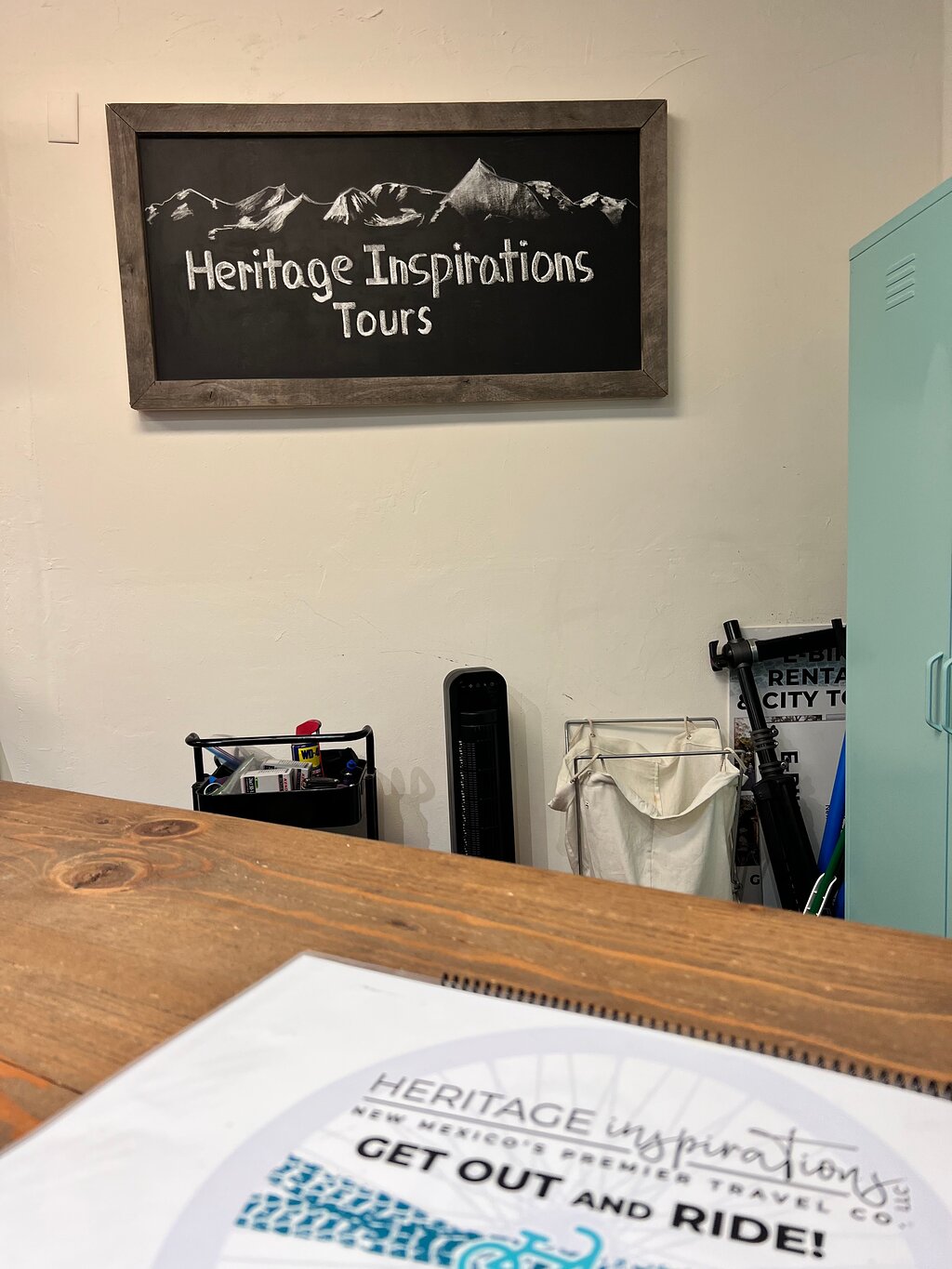
Excursion d'aventure en vélo électrique en petit groupe à travers Hidden Santa Fe

Aperçu
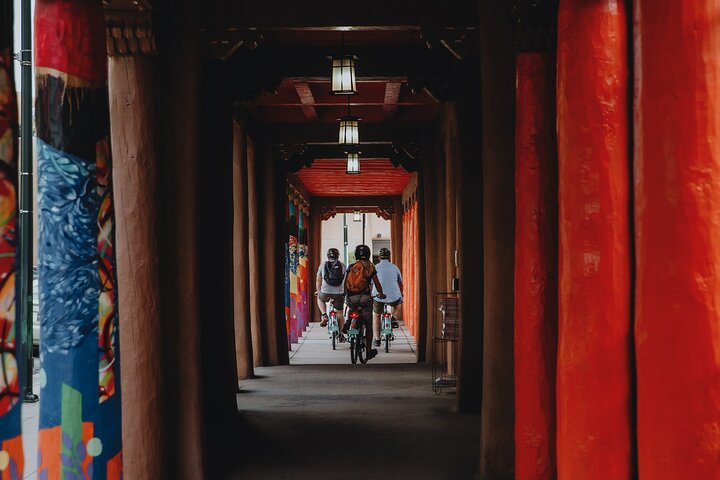
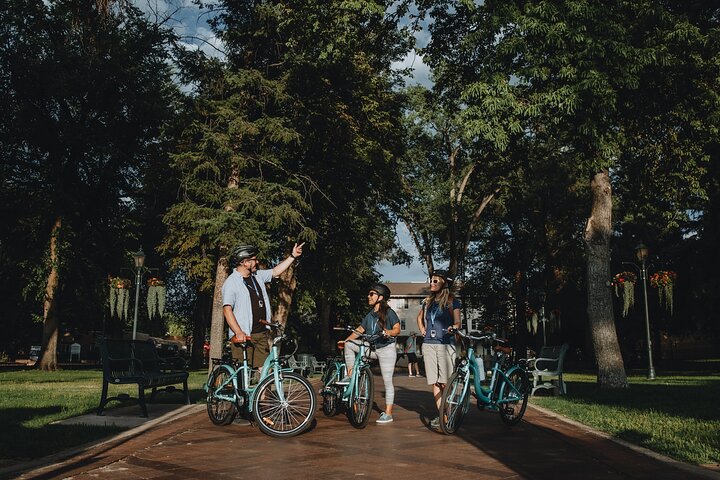
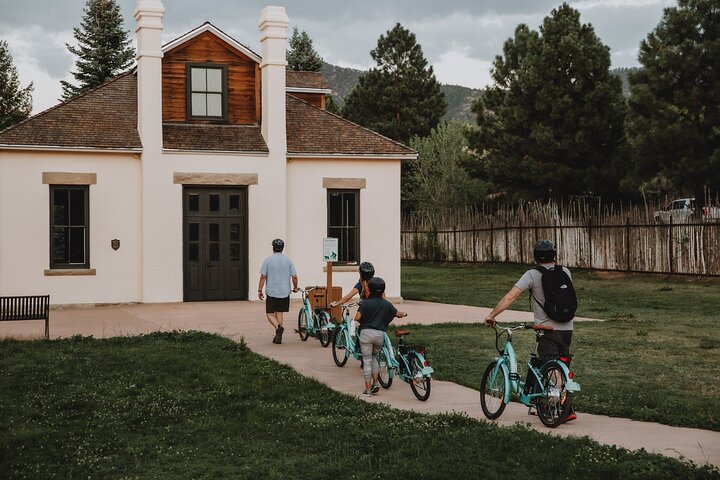
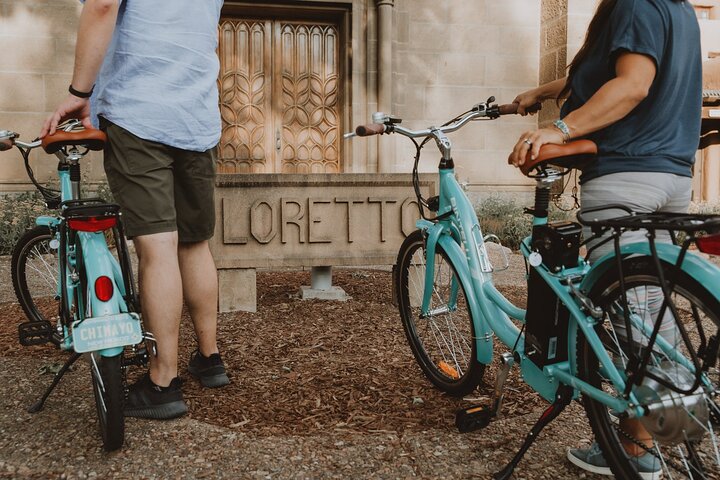
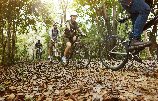
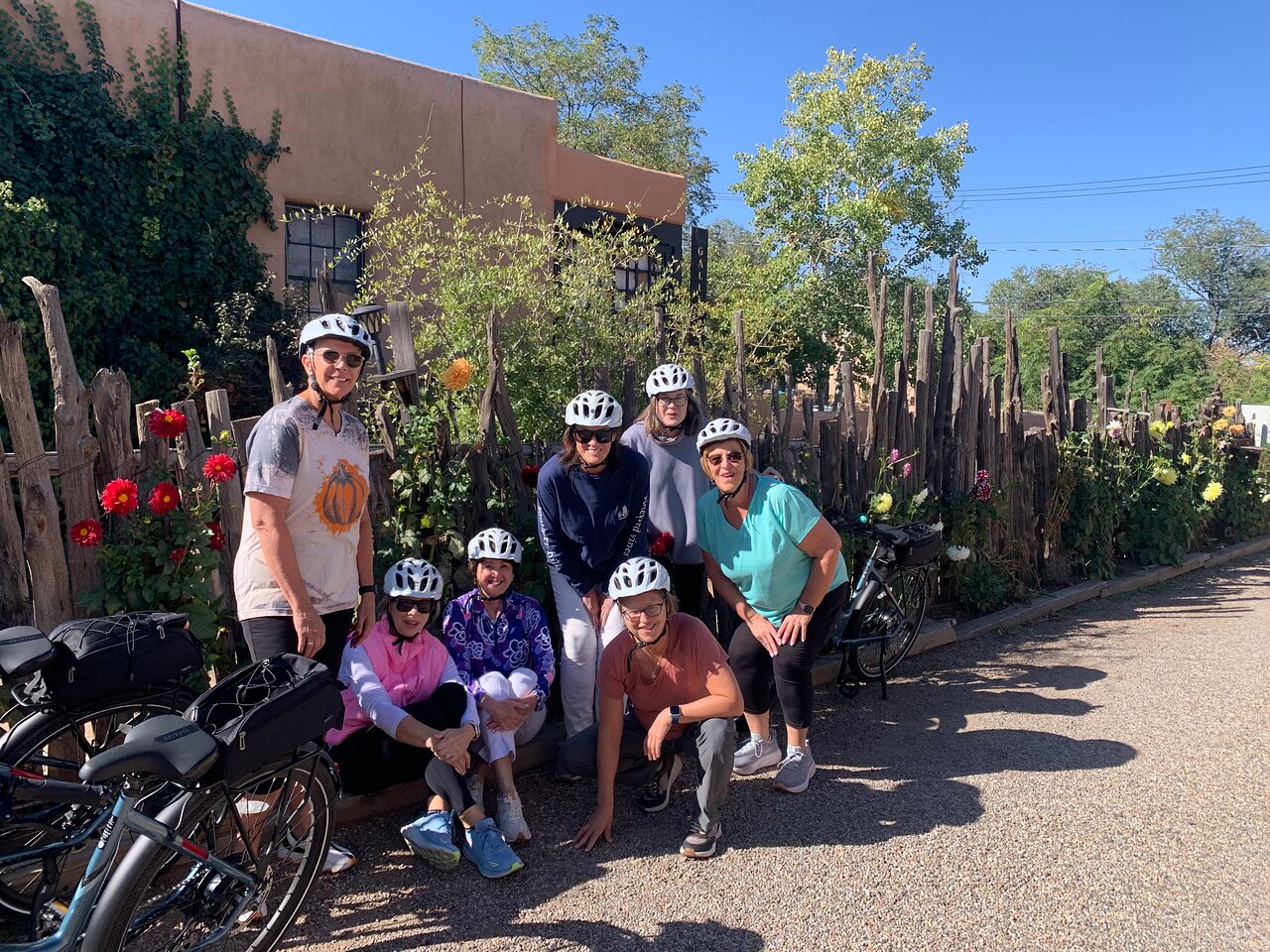
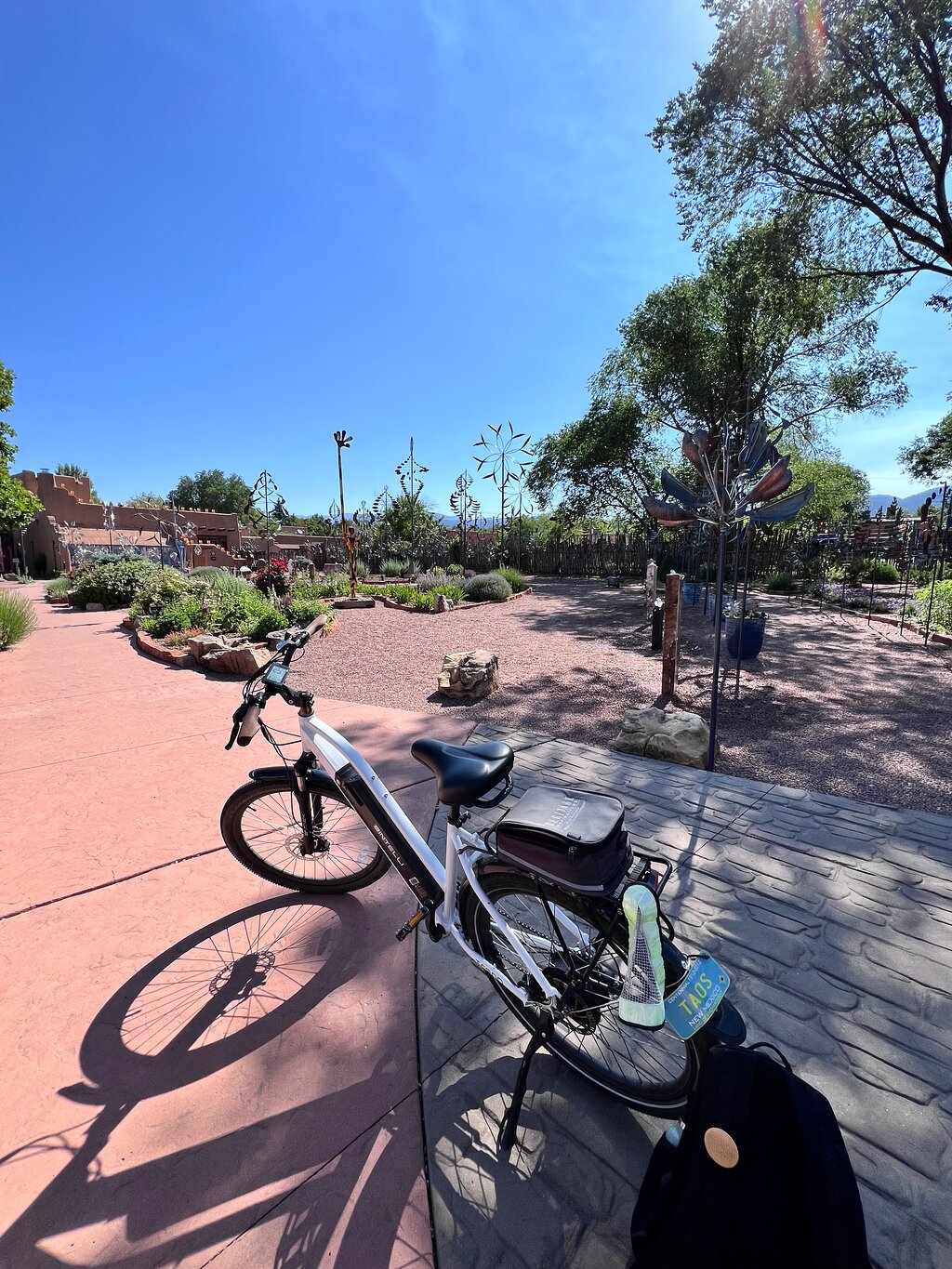
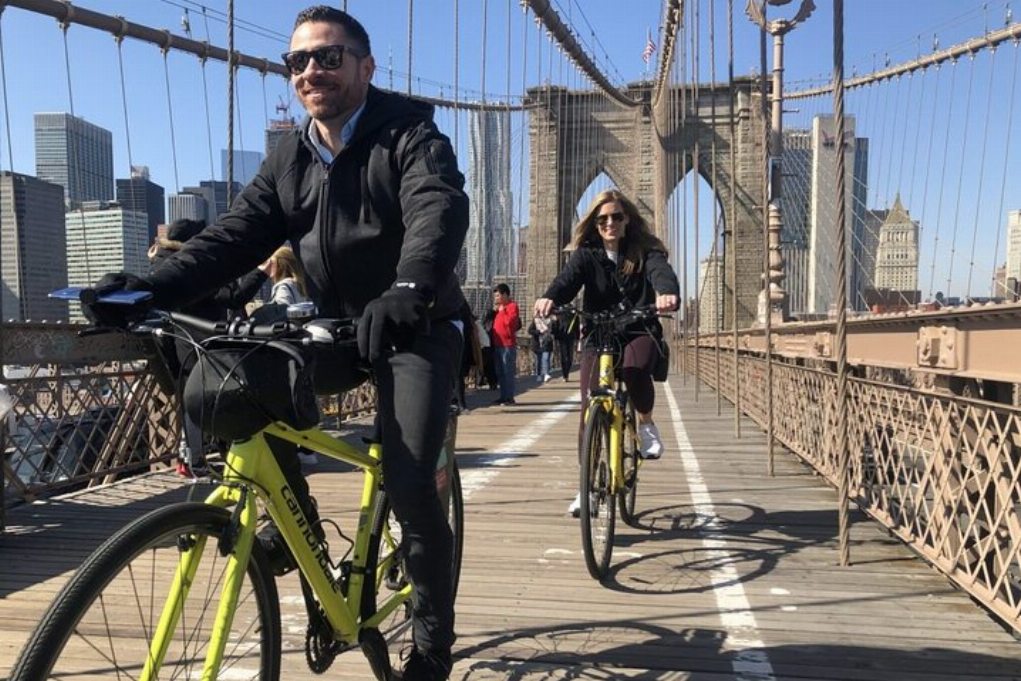
E-Bikes are what defines F-U-N! They have an integrated motor that offers riders a pedal assist option to give a little extra boost when needed. They are a workout with a little less work. Pedal assist removes the challenge of biking in high elevation and climbing hills, so riders can just enjoy the journey. E-Bikes are a one-size-fits-all option for biking tours giving multigenerational families and groups of varying physical abilities the chance to ride together, unveiling a whole new lens on travel.

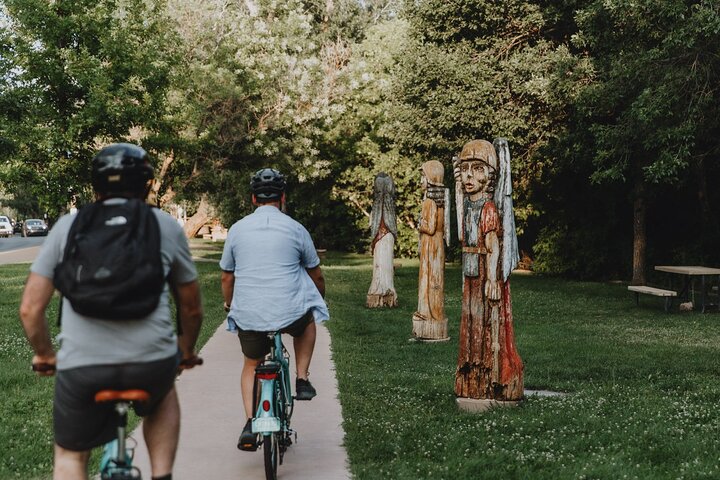
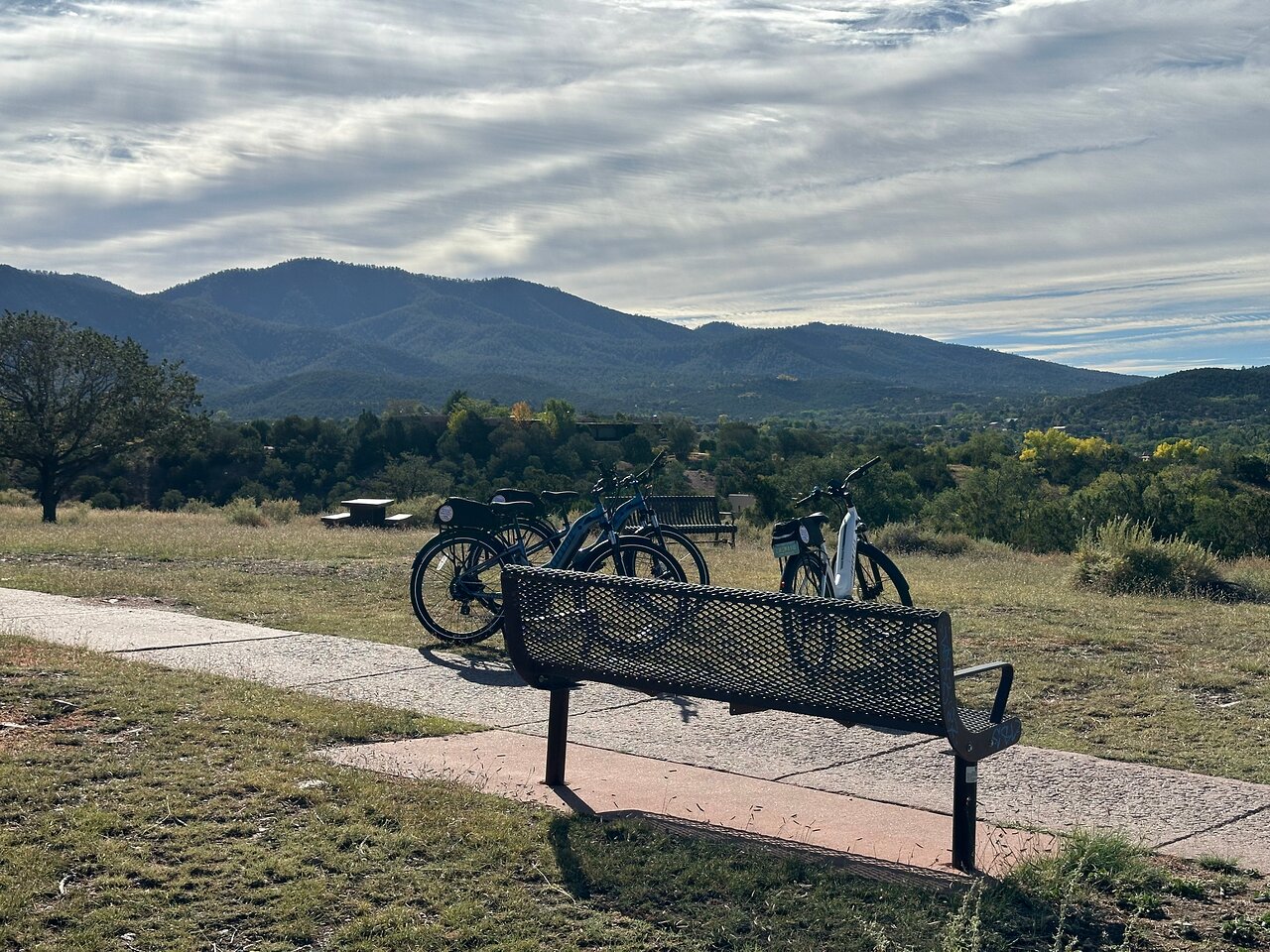
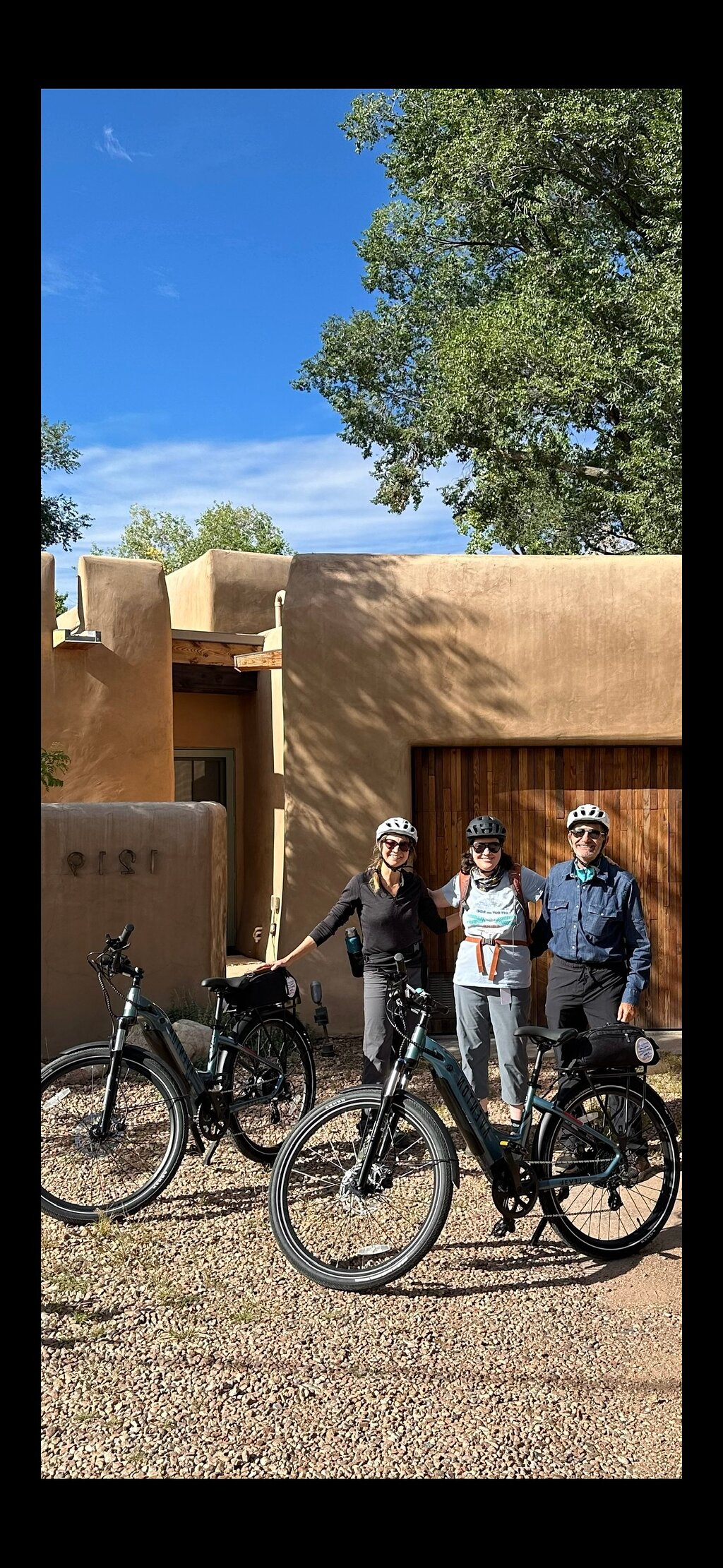
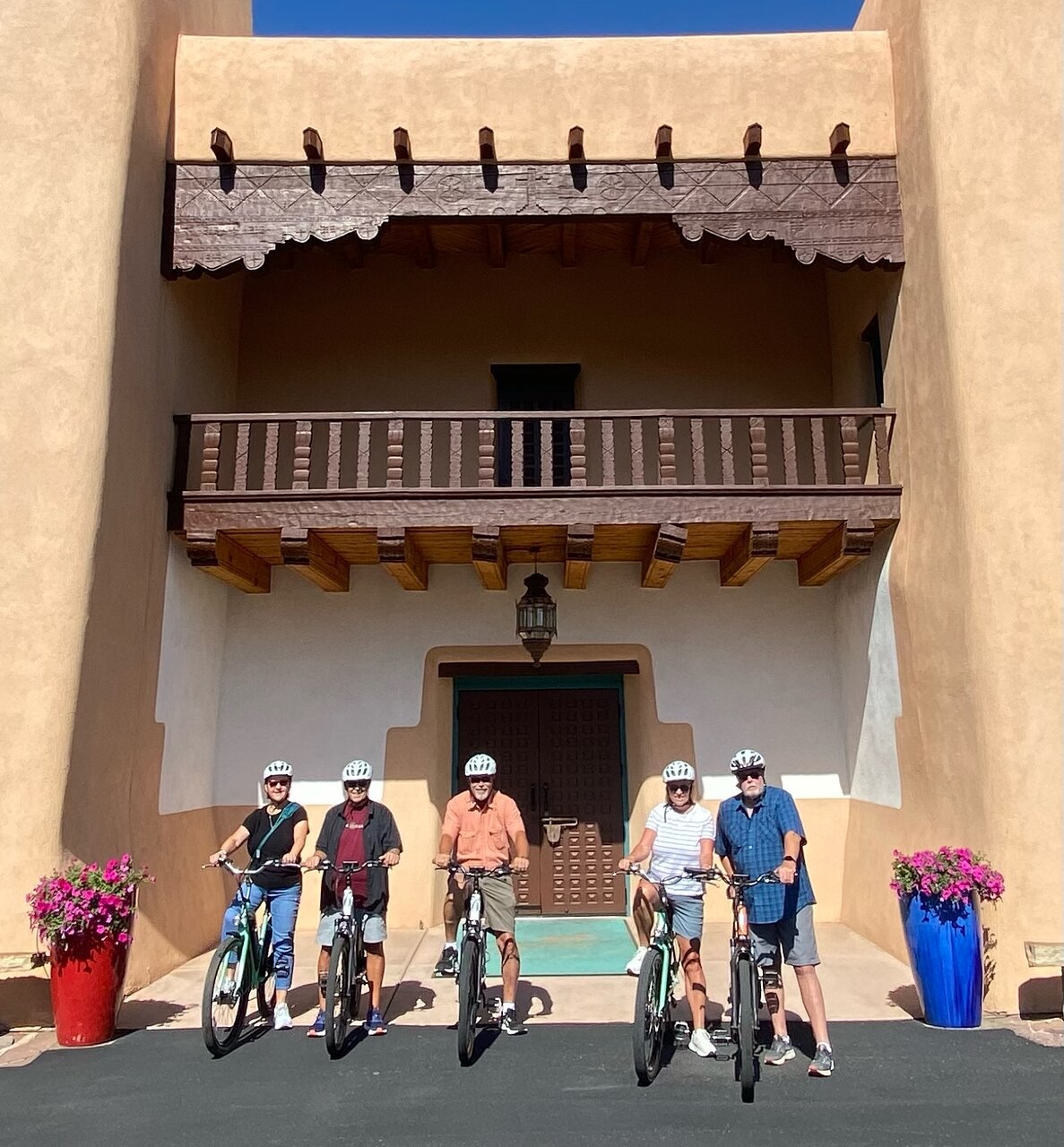
Try one of our crafted city tours where you will explore the lesser known corners of Santa Fe, diving deep into the culture and scenery. Our Inspired Guide will lead you as you tour the neighborhoods and wooded areas that serve as the foundation of the culture and history that created these unique and enchanting cities. Let our guides be in charge of the navigation and bring your tour to life with insider stories and tips!

Ville: Santa Fe
Fri 13 Mar
i
Vous pouvez déjà choisir la date sur le site de réservation
À partir de $180.00
Fri 13 Mar
À partir de $180.00
Faire une réservation
Ce qui est inclu
Bike Helmet
E-Bike Rental
Bike Trunk Bag & Safety Reflective Triangle
Bike Helmet
E-Bike Rental
Bike Trunk Bag & Safety Reflective Triangle
Bike Helmet
Information additionnelle
  • Not recommended for pregnant travelers
  • Not recommended for travelers with poor cardiovascular health
  • Travelers should have at least a moderate level of physical fitness
  • Parking is available. Advise Valet you are there for a tour and they will instruct you further
  • Minimum 15 years of age. Previous E-Bike riding experience recommended.
À quoi s'attendre
1
Cross of the Martyrs
A 25-foot-tall reinforced concrete cross sits on top of Paseo de la Loma Hill in Fort Marcy Park and commemorates the 21 Franciscan priests and many more Spanish colonists who died during the Pueblo revolt of 1680. Easily accessible via a gently sloping staircase that starts on the eastern corner of Paseo de Peralta, the summit provides both a close-up of the adobe walls and giant cottonwood trees of downtown Santa Fe and giant vistas of the Jemez Mountains in the west beyond.
2
Randall Davey Audubon Center
Explore above Upper Canyon Road on this short gravel entrance to the Audubon Center. The property was part of the Talaya Hill grant given in 1731 lo Manuel Trujillo. Far from the Plaza in Spanish days, it was used only for grazing and woodcutting until the first sawmill in Santa Fe was built there by the U.S. army quartermaster in 1847 to provide lumber for Fort Marcy, then under construction. The main house still shows the stone walls and huge, hand-hewn timbers of the mill on the interior, carefully preserved by the late owner, Randall Davey, an artist of international reputation.
3
Santa Fe River Park
The Santa Fe River is a tributary of the Rio Grande in northern New Mexico. It starts in the Sangre de Cristo mountain range and passes through the state capital and spills into the Rio Grande River.
4
Santa Fe Railyard
Cruise through the Railyard District, a 50-acre arts district. When the City of Santa Fe purchased 50 acres of underused land along Guadalupe Street and Cerrillos Road and further south near Baca Street, its citizens came together to plan the future of the Railyard and decided on developing a vibrant new urban space that would serve all Santa Feans, celebrating their history, arts, recreation, landscape and environment.
5
Frenchy's Field Park
Frenchy’s Field Park Labyrinth was created in 2001. The project was sponsored by the Santa Fe Interfaith Council in 1998, and led by community organizer Michael Hopp and his team of artisans. This 7-circuit Classical labyrinth is made of a modified adobe mix, called “cobb.” The mounds are molded with clay-rich soil, straw, and water. This labyrinth needs to be maintained on an annual basis, a process called “mudding.”
6
The Spa at Loretto
Founded in 1975 by the Kirkpatrick family, the Inn and Spa at Loretto sits on the former site of the historic Our Lady of Loretto Academy and is adjacent to the famed Loretto Chapel featuring the miraculous staircase. Now one of the most photographed buildings in the state, the Inn is a Santa Fe icon and testament to the city's modern history. From its beginnings as a unique adobe style Best Western to the property it is today, the Inn remains true to its roots - imparting casual sophistication with sincere Southwest hospitality and authentic Santa Fe style.
7
Cross of the Martyrs
A 25-foot-tall reinforced concrete cross sits on top of Paseo de la Loma Hill in Fort Marcy Park and commemorates the 21 Franciscan priests and many more Spanish colonists who died during the Pueblo revolt of 1680. Easily accessible via a gently sloping staircase that starts on the eastern corner of Paseo de Peralta, the summit provides both a close-up of the adobe walls and giant cottonwood trees of downtown Santa Fe and giant vistas of the Jemez Mountains in the west beyond.
8
Randall Davey Audubon Center
Explore above Upper Canyon Road on this short gravel entrance to the Audubon Center. The property was part of the Talaya Hill grant given in 1731 lo Manuel Trujillo. Far from the Plaza in Spanish days, it was used only for grazing and woodcutting until the first sawmill in Santa Fe was built there by the U.S. army quartermaster in 1847 to provide lumber for Fort Marcy, then under construction. The main house still shows the stone walls and huge, hand-hewn timbers of the mill on the interior, carefully preserved by the late owner, Randall Davey, an artist of international reputation.
9
Santa Fe River Park
The Santa Fe River is a tributary of the Rio Grande in northern New Mexico. It starts in the Sangre de Cristo mountain range and passes through the state capital and spills into the Rio Grande River.
10
Santa Fe Railyard
Cruise through the Railyard District, a 50-acre arts district. When the City of Santa Fe purchased 50 acres of underused land along Guadalupe Street and Cerrillos Road and further south near Baca Street, its citizens came together to plan the future of the Railyard and decided on developing a vibrant new urban space that would serve all Santa Feans, celebrating their history, arts, recreation, landscape and environment.
11
Frenchy's Field Park
Frenchy’s Field Park Labyrinth was created in 2001. The project was sponsored by the Santa Fe Interfaith Council in 1998, and led by community organizer Michael Hopp and his team of artisans. This 7-circuit Classical labyrinth is made of a modified adobe mix, called “cobb.” The mounds are molded with clay-rich soil, straw, and water. This labyrinth needs to be maintained on an annual basis, a process called “mudding.”
12
The Spa at Loretto
Founded in 1975 by the Kirkpatrick family, the Inn and Spa at Loretto sits on the former site of the historic Our Lady of Loretto Academy and is adjacent to the famed Loretto Chapel featuring the miraculous staircase. Now one of the most photographed buildings in the state, the Inn is a Santa Fe icon and testament to the city's modern history. From its beginnings as a unique adobe style Best Western to the property it is today, the Inn remains true to its roots - imparting casual sophistication with sincere Southwest hospitality and authentic Santa Fe style.
13
Cross of the Martyrs
A 25-foot-tall reinforced concrete cross sits on top of Paseo de la Loma Hill in Fort Marcy Park and commemorates the 21 Franciscan priests and many more Spanish colonists who died during the Pueblo revolt of 1680. Easily accessible via a gently sloping staircase that starts on the eastern corner of Paseo de Peralta, the summit provides both a close-up of the adobe walls and giant cottonwood trees of downtown Santa Fe and giant vistas of the Jemez Mountains in the west beyond.
14
Randall Davey Audubon Center
Explore above Upper Canyon Road on this short gravel entrance to the Audubon Center. The property was part of the Talaya Hill grant given in 1731 lo Manuel Trujillo. Far from the Plaza in Spanish days, it was used only for grazing and woodcutting until the first sawmill in Santa Fe was built there by the U.S. army quartermaster in 1847 to provide lumber for Fort Marcy, then under construction. The main house still shows the stone walls and huge, hand-hewn timbers of the mill on the interior, carefully preserved by the late owner, Randall Davey, an artist of international reputation.
15
Santa Fe River Park
The Santa Fe River is a tributary of the Rio Grande in northern New Mexico. It starts in the Sangre de Cristo mountain range and passes through the state capital and spills into the Rio Grande River.
16
Santa Fe Railyard
Cruise through the Railyard District, a 50-acre arts district. When the City of Santa Fe purchased 50 acres of underused land along Guadalupe Street and Cerrillos Road and further south near Baca Street, its citizens came together to plan the future of the Railyard and decided on developing a vibrant new urban space that would serve all Santa Feans, celebrating their history, arts, recreation, landscape and environment.
17
Frenchy's Field Park
Frenchy’s Field Park Labyrinth was created in 2001. The project was sponsored by the Santa Fe Interfaith Council in 1998, and led by community organizer Michael Hopp and his team of artisans. This 7-circuit Classical labyrinth is made of a modified adobe mix, called “cobb.” The mounds are molded with clay-rich soil, straw, and water. This labyrinth needs to be maintained on an annual basis, a process called “mudding.”
18
The Spa at Loretto
Founded in 1975 by the Kirkpatrick family, the Inn and Spa at Loretto sits on the former site of the historic Our Lady of Loretto Academy and is adjacent to the famed Loretto Chapel featuring the miraculous staircase. Now one of the most photographed buildings in the state, the Inn is a Santa Fe icon and testament to the city's modern history. From its beginnings as a unique adobe style Best Western to the property it is today, the Inn remains true to its roots - imparting casual sophistication with sincere Southwest hospitality and authentic Santa Fe style.
19
Cross of the Martyrs
A 25-foot-tall reinforced concrete cross sits on top of Paseo de la Loma Hill in Fort Marcy Park and commemorates the 21 Franciscan priests and many more Spanish colonists who died during the Pueblo revolt of 1680. Easily accessible via a gently sloping staircase that starts on the eastern corner of Paseo de Peralta, the summit provides both a close-up of the adobe walls and giant cottonwood trees of downtown Santa Fe and giant vistas of the Jemez Mountains in the west beyond.
20
Randall Davey Audubon Center
Explore above Upper Canyon Road on this short gravel entrance to the Audubon Center. The property was part of the Talaya Hill grant given in 1731 lo Manuel Trujillo. Far from the Plaza in Spanish days, it was used only for grazing and woodcutting until the first sawmill in Santa Fe was built there by the U.S. army quartermaster in 1847 to provide lumber for Fort Marcy, then under construction. The main house still shows the stone walls and huge, hand-hewn timbers of the mill on the interior, carefully preserved by the late owner, Randall Davey, an artist of international reputation.
21
Santa Fe River Park
The Santa Fe River is a tributary of the Rio Grande in northern New Mexico. It starts in the Sangre de Cristo mountain range and passes through the state capital and spills into the Rio Grande River.
22
Santa Fe Railyard
Cruise through the Railyard District, a 50-acre arts district. When the City of Santa Fe purchased 50 acres of underused land along Guadalupe Street and Cerrillos Road and further south near Baca Street, its citizens came together to plan the future of the Railyard and decided on developing a vibrant new urban space that would serve all Santa Feans, celebrating their history, arts, recreation, landscape and environment.
23
Frenchy's Field Park
Frenchy’s Field Park Labyrinth was created in 2001. The project was sponsored by the Santa Fe Interfaith Council in 1998, and led by community organizer Michael Hopp and his team of artisans. This 7-circuit Classical labyrinth is made of a modified adobe mix, called “cobb.” The mounds are molded with clay-rich soil, straw, and water. This labyrinth needs to be maintained on an annual basis, a process called “mudding.”
24
The Spa at Loretto
Founded in 1975 by the Kirkpatrick family, the Inn and Spa at Loretto sits on the former site of the historic Our Lady of Loretto Academy and is adjacent to the famed Loretto Chapel featuring the miraculous staircase. Now one of the most photographed buildings in the state, the Inn is a Santa Fe icon and testament to the city's modern history. From its beginnings as a unique adobe style Best Western to the property it is today, the Inn remains true to its roots - imparting casual sophistication with sincere Southwest hospitality and authentic Santa Fe style.
25
Cross of the Martyrs
A 25-foot-tall reinforced concrete cross sits on top of Paseo de la Loma Hill in Fort Marcy Park and commemorates the 21 Franciscan priests and many more Spanish colonists who died during the Pueblo revolt of 1680. Easily accessible via a gently sloping staircase that starts on the eastern corner of Paseo de Peralta, the summit provides both a close-up of the adobe walls and giant cottonwood trees of downtown Santa Fe and giant vistas of the Jemez Mountains in the west beyond.
26
Randall Davey Audubon Center
Explore above Upper Canyon Road on this short gravel entrance to the Audubon Center. The property was part of the Talaya Hill grant given in 1731 lo Manuel Trujillo. Far from the Plaza in Spanish days, it was used only for grazing and woodcutting until the first sawmill in Santa Fe was built there by the U.S. army quartermaster in 1847 to provide lumber for Fort Marcy, then under construction. The main house still shows the stone walls and huge, hand-hewn timbers of the mill on the interior, carefully preserved by the late owner, Randall Davey, an artist of international reputation.
27
Santa Fe River Park
The Santa Fe River is a tributary of the Rio Grande in northern New Mexico. It starts in the Sangre de Cristo mountain range and passes through the state capital and spills into the Rio Grande River.
28
Santa Fe Railyard
Cruise through the Railyard District, a 50-acre arts district. When the City of Santa Fe purchased 50 acres of underused land along Guadalupe Street and Cerrillos Road and further south near Baca Street, its citizens came together to plan the future of the Railyard and decided on developing a vibrant new urban space that would serve all Santa Feans, celebrating their history, arts, recreation, landscape and environment.
29
Frenchy's Field Park
Frenchy’s Field Park Labyrinth was created in 2001. The project was sponsored by the Santa Fe Interfaith Council in 1998, and led by community organizer Michael Hopp and his team of artisans. This 7-circuit Classical labyrinth is made of a modified adobe mix, called “cobb.” The mounds are molded with clay-rich soil, straw, and water. This labyrinth needs to be maintained on an annual basis, a process called “mudding.”
30
The Spa at Loretto
Founded in 1975 by the Kirkpatrick family, the Inn and Spa at Loretto sits on the former site of the historic Our Lady of Loretto Academy and is adjacent to the famed Loretto Chapel featuring the miraculous staircase. Now one of the most photographed buildings in the state, the Inn is a Santa Fe icon and testament to the city's modern history. From its beginnings as a unique adobe style Best Western to the property it is today, the Inn remains true to its roots - imparting casual sophistication with sincere Southwest hospitality and authentic Santa Fe style.
31
Cross of the Martyrs
A 25-foot-tall reinforced concrete cross sits on top of Paseo de la Loma Hill in Fort Marcy Park and commemorates the 21 Franciscan priests and many more Spanish colonists who died during the Pueblo revolt of 1680. Easily accessible via a gently sloping staircase that starts on the eastern corner of Paseo de Peralta, the summit provides both a close-up of the adobe walls and giant cottonwood trees of downtown Santa Fe and giant vistas of the Jemez Mountains in the west beyond.
32
Randall Davey Audubon Center
Explore above Upper Canyon Road on this short gravel entrance to the Audubon Center. The property was part of the Talaya Hill grant given in 1731 lo Manuel Trujillo. Far from the Plaza in Spanish days, it was used only for grazing and woodcutting until the first sawmill in Santa Fe was built there by the U.S. army quartermaster in 1847 to provide lumber for Fort Marcy, then under construction. The main house still shows the stone walls and huge, hand-hewn timbers of the mill on the interior, carefully preserved by the late owner, Randall Davey, an artist of international reputation.
33
Santa Fe River Park
The Santa Fe River is a tributary of the Rio Grande in northern New Mexico. It starts in the Sangre de Cristo mountain range and passes through the state capital and spills into the Rio Grande River.
34
Santa Fe Railyard
Cruise through the Railyard District, a 50-acre arts district. When the City of Santa Fe purchased 50 acres of underused land along Guadalupe Street and Cerrillos Road and further south near Baca Street, its citizens came together to plan the future of the Railyard and decided on developing a vibrant new urban space that would serve all Santa Feans, celebrating their history, arts, recreation, landscape and environment.
35
Frenchy's Field Park
Frenchy’s Field Park Labyrinth was created in 2001. The project was sponsored by the Santa Fe Interfaith Council in 1998, and led by community organizer Michael Hopp and his team of artisans. This 7-circuit Classical labyrinth is made of a modified adobe mix, called “cobb.” The mounds are molded with clay-rich soil, straw, and water. This labyrinth needs to be maintained on an annual basis, a process called “mudding.”
36
The Spa at Loretto
Founded in 1975 by the Kirkpatrick family, the Inn and Spa at Loretto sits on the former site of the historic Our Lady of Loretto Academy and is adjacent to the famed Loretto Chapel featuring the miraculous staircase. Now one of the most photographed buildings in the state, the Inn is a Santa Fe icon and testament to the city's modern history. From its beginnings as a unique adobe style Best Western to the property it is today, the Inn remains true to its roots - imparting casual sophistication with sincere Southwest hospitality and authentic Santa Fe style.
37
Cross of the Martyrs
A 25-foot-tall reinforced concrete cross sits on top of Paseo de la Loma Hill in Fort Marcy Park and commemorates the 21 Franciscan priests and many more Spanish colonists who died during the Pueblo revolt of 1680. Easily accessible via a gently sloping staircase that starts on the eastern corner of Paseo de Peralta, the summit provides both a close-up of the adobe walls and giant cottonwood trees of downtown Santa Fe and giant vistas of the Jemez Mountains in the west beyond.
38
Randall Davey Audubon Center
Explore above Upper Canyon Road on this short gravel entrance to the Audubon Center. The property was part of the Talaya Hill grant given in 1731 lo Manuel Trujillo. Far from the Plaza in Spanish days, it was used only for grazing and woodcutting until the first sawmill in Santa Fe was built there by the U.S. army quartermaster in 1847 to provide lumber for Fort Marcy, then under construction. The main house still shows the stone walls and huge, hand-hewn timbers of the mill on the interior, carefully preserved by the late owner, Randall Davey, an artist of international reputation.
39
Santa Fe River Park
The Santa Fe River is a tributary of the Rio Grande in northern New Mexico. It starts in the Sangre de Cristo mountain range and passes through the state capital and spills into the Rio Grande River.
40
Santa Fe Railyard
Cruise through the Railyard District, a 50-acre arts district. When the City of Santa Fe purchased 50 acres of underused land along Guadalupe Street and Cerrillos Road and further south near Baca Street, its citizens came together to plan the future of the Railyard and decided on developing a vibrant new urban space that would serve all Santa Feans, celebrating their history, arts, recreation, landscape and environment.
41
Frenchy's Field Park
Frenchy’s Field Park Labyrinth was created in 2001. The project was sponsored by the Santa Fe Interfaith Council in 1998, and led by community organizer Michael Hopp and his team of artisans. This 7-circuit Classical labyrinth is made of a modified adobe mix, called “cobb.” The mounds are molded with clay-rich soil, straw, and water. This labyrinth needs to be maintained on an annual basis, a process called “mudding.”
42
The Spa at Loretto
Founded in 1975 by the Kirkpatrick family, the Inn and Spa at Loretto sits on the former site of the historic Our Lady of Loretto Academy and is adjacent to the famed Loretto Chapel featuring the miraculous staircase. Now one of the most photographed buildings in the state, the Inn is a Santa Fe icon and testament to the city's modern history. From its beginnings as a unique adobe style Best Western to the property it is today, the Inn remains true to its roots - imparting casual sophistication with sincere Southwest hospitality and authentic Santa Fe style.
43
Croix des Martyrs
Une croix en béton armé de 25 pieds de haut se trouve au sommet de la colline Paseo de la Loma à Fort Marcy Park et commémore les 21 prêtres franciscains et de nombreux autres colons espagnols morts lors de la révolte de Pueblo de 1680. Facilement accessible via un escalier en pente douce qui commence à l'angle est du Paseo de Peralta, le sommet offre à la fois un gros plan sur les murs en adobe et les peupliers géants du centre-ville de Santa Fe et des vues géantes sur les montagnes Jemez à l'ouest au-delà.
44
Centre Randall Davey Audubon
Explorez Upper Canyon Road sur cette courte entrée en gravier du centre Audubon. La propriété faisait partie de la concession Talaya Hill accordée en 1731 à Manuel Trujillo. Loin de la Plaza à l'époque espagnole, elle n'était utilisée que pour le pâturage et la coupe du bois jusqu'à ce que la première scierie de Santa Fe y soit construite par le quartier-maître de l'armée américaine en 1847 pour fournir du bois à Fort Marcy, alors en construction. La maison principale présente encore à l'intérieur les murs de pierre et les immenses charpentes taillées à la main du moulin, soigneusement conservées par le défunt propriétaire, Randall Davey, un artiste de renommée internationale.
45
Parc de la rivière Santa Fe
La rivière Santa Fe est un affluent du Rio Grande dans le nord du Nouveau-Mexique. Il commence dans la chaîne de montagnes Sangre de Cristo et traverse la capitale de l'État et se déverse dans le Rio Grande.
46
Gare de Santa Fe
Naviguez dans le Railyard District, un quartier artistique de 50 acres. Lorsque la ville de Santa Fe a acheté 50 acres de terrain sous-utilisé le long de la rue Guadalupe et de la route Cerrillos et plus au sud près de la rue Baca, ses citoyens se sont réunis pour planifier l'avenir de la gare de triage et ont décidé de développer un nouvel espace urbain dynamique qui servirait tous les Santa Feans, célébrant leur histoire, leurs arts, leurs loisirs, leur paysage et leur environnement.
47
Parc du terrain de Frenchy
Frenchy's Field Park Labyrinth a été créé en 2001. Le projet a été parrainé par le Santa Fe Interfaith Council en 1998 et dirigé par l'organisateur communautaire Michael Hopp et son équipe d'artisans. Ce labyrinthe classique à 7 circuits est fait d'un mélange d'adobe modifié, appelé "cobb". Les monticules sont moulés avec de la terre riche en argile, de la paille et de l'eau. Ce labyrinthe doit être entretenu sur une base annuelle, un processus appelé "mudding".
48
Le Spa de Lorette
Fondé en 1975 par la famille Kirkpatrick, l'Inn and Spa at Loretto se trouve sur l'ancien site de l'académie historique Our Lady of Loretto et est adjacent à la célèbre chapelle Loretto avec son escalier miraculeux. Désormais l'un des bâtiments les plus photographiés de l'État, l'auberge est une icône de Santa Fe et un témoignage de l'histoire moderne de la ville. Depuis ses débuts en tant que Best Western unique de style adobe jusqu'à la propriété qu'elle est aujourd'hui, l'auberge reste fidèle à ses racines - conférant une sophistication décontractée avec une hospitalité sincère du sud-ouest et un style Santa Fe authentique.
49
Cross of the Martyrs
A 25-foot-tall reinforced concrete cross sits on top of Paseo de la Loma Hill in Fort Marcy Park and commemorates the 21 Franciscan priests and many more Spanish colonists who died during the Pueblo revolt of 1680. Easily accessible via a gently sloping staircase that starts on the eastern corner of Paseo de Peralta, the summit provides both a close-up of the adobe walls and giant cottonwood trees of downtown Santa Fe and giant vistas of the Jemez Mountains in the west beyond.
50
Randall Davey Audubon Center
Explore above Upper Canyon Road on this short gravel entrance to the Audubon Center. The property was part of the Talaya Hill grant given in 1731 lo Manuel Trujillo. Far from the Plaza in Spanish days, it was used only for grazing and woodcutting until the first sawmill in Santa Fe was built there by the U.S. army quartermaster in 1847 to provide lumber for Fort Marcy, then under construction. The main house still shows the stone walls and huge, hand-hewn timbers of the mill on the interior, carefully preserved by the late owner, Randall Davey, an artist of international reputation.
51
Santa Fe River Park
The Santa Fe River is a tributary of the Rio Grande in northern New Mexico. It starts in the Sangre de Cristo mountain range and passes through the state capital and spills into the Rio Grande River.
52
Santa Fe Railyard
Cruise through the Railyard District, a 50-acre arts district. When the City of Santa Fe purchased 50 acres of underused land along Guadalupe Street and Cerrillos Road and further south near Baca Street, its citizens came together to plan the future of the Railyard and decided on developing a vibrant new urban space that would serve all Santa Feans, celebrating their history, arts, recreation, landscape and environment.
53
Frenchy's Field Park
Frenchy’s Field Park Labyrinth was created in 2001. The project was sponsored by the Santa Fe Interfaith Council in 1998, and led by community organizer Michael Hopp and his team of artisans. This 7-circuit Classical labyrinth is made of a modified adobe mix, called “cobb.” The mounds are molded with clay-rich soil, straw, and water. This labyrinth needs to be maintained on an annual basis, a process called “mudding.”
54
The Spa at Loretto
Founded in 1975 by the Kirkpatrick family, the Inn and Spa at Loretto sits on the former site of the historic Our Lady of Loretto Academy and is adjacent to the famed Loretto Chapel featuring the miraculous staircase. Now one of the most photographed buildings in the state, the Inn is a Santa Fe icon and testament to the city's modern history. From its beginnings as a unique adobe style Best Western to the property it is today, the Inn remains true to its roots - imparting casual sophistication with sincere Southwest hospitality and authentic Santa Fe style.
55
Cross of the Martyrs
A 25-foot-tall reinforced concrete cross sits on top of Paseo de la Loma Hill in Fort Marcy Park and commemorates the 21 Franciscan priests and many more Spanish colonists who died during the Pueblo revolt of 1680. Easily accessible via a gently sloping staircase that starts on the eastern corner of Paseo de Peralta, the summit provides both a close-up of the adobe walls and giant cottonwood trees of downtown Santa Fe and giant vistas of the Jemez Mountains in the west beyond.
56
Randall Davey Audubon Center
Explore above Upper Canyon Road on this short gravel entrance to the Audubon Center. The property was part of the Talaya Hill grant given in 1731 lo Manuel Trujillo. Far from the Plaza in Spanish days, it was used only for grazing and woodcutting until the first sawmill in Santa Fe was built there by the U.S. army quartermaster in 1847 to provide lumber for Fort Marcy, then under construction. The main house still shows the stone walls and huge, hand-hewn timbers of the mill on the interior, carefully preserved by the late owner, Randall Davey, an artist of international reputation.
57
Santa Fe River Park
The Santa Fe River is a tributary of the Rio Grande in northern New Mexico. It starts in the Sangre de Cristo mountain range and passes through the state capital and spills into the Rio Grande River.
58
Santa Fe Railyard
Cruise through the Railyard District, a 50-acre arts district. When the City of Santa Fe purchased 50 acres of underused land along Guadalupe Street and Cerrillos Road and further south near Baca Street, its citizens came together to plan the future of the Railyard and decided on developing a vibrant new urban space that would serve all Santa Feans, celebrating their history, arts, recreation, landscape and environment.
59
Frenchy's Field Park
Frenchy’s Field Park Labyrinth was created in 2001. The project was sponsored by the Santa Fe Interfaith Council in 1998, and led by community organizer Michael Hopp and his team of artisans. This 7-circuit Classical labyrinth is made of a modified adobe mix, called “cobb.” The mounds are molded with clay-rich soil, straw, and water. This labyrinth needs to be maintained on an annual basis, a process called “mudding.”
60
The Spa at Loretto
Founded in 1975 by the Kirkpatrick family, the Inn and Spa at Loretto sits on the former site of the historic Our Lady of Loretto Academy and is adjacent to the famed Loretto Chapel featuring the miraculous staircase. Now one of the most photographed buildings in the state, the Inn is a Santa Fe icon and testament to the city's modern history. From its beginnings as a unique adobe style Best Western to the property it is today, the Inn remains true to its roots - imparting casual sophistication with sincere Southwest hospitality and authentic Santa Fe style.
61
Cross of the Martyrs
A 25-foot-tall reinforced concrete cross sits on top of Paseo de la Loma Hill in Fort Marcy Park and commemorates the 21 Franciscan priests and many more Spanish colonists who died during the Pueblo revolt of 1680. Easily accessible via a gently sloping staircase that starts on the eastern corner of Paseo de Peralta, the summit provides both a close-up of the adobe walls and giant cottonwood trees of downtown Santa Fe and giant vistas of the Jemez Mountains in the west beyond.
62
Randall Davey Audubon Center
Explore above Upper Canyon Road on this short gravel entrance to the Audubon Center. The property was part of the Talaya Hill grant given in 1731 lo Manuel Trujillo. Far from the Plaza in Spanish days, it was used only for grazing and woodcutting until the first sawmill in Santa Fe was built there by the U.S. army quartermaster in 1847 to provide lumber for Fort Marcy, then under construction. The main house still shows the stone walls and huge, hand-hewn timbers of the mill on the interior, carefully preserved by the late owner, Randall Davey, an artist of international reputation.
63
Santa Fe River Park
The Santa Fe River is a tributary of the Rio Grande in northern New Mexico. It starts in the Sangre de Cristo mountain range and passes through the state capital and spills into the Rio Grande River.
64
Santa Fe Railyard
Cruise through the Railyard District, a 50-acre arts district. When the City of Santa Fe purchased 50 acres of underused land along Guadalupe Street and Cerrillos Road and further south near Baca Street, its citizens came together to plan the future of the Railyard and decided on developing a vibrant new urban space that would serve all Santa Feans, celebrating their history, arts, recreation, landscape and environment.
65
Frenchy's Field Park
Frenchy’s Field Park Labyrinth was created in 2001. The project was sponsored by the Santa Fe Interfaith Council in 1998, and led by community organizer Michael Hopp and his team of artisans. This 7-circuit Classical labyrinth is made of a modified adobe mix, called “cobb.” The mounds are molded with clay-rich soil, straw, and water. This labyrinth needs to be maintained on an annual basis, a process called “mudding.”
66
The Spa at Loretto
Founded in 1975 by the Kirkpatrick family, the Inn and Spa at Loretto sits on the former site of the historic Our Lady of Loretto Academy and is adjacent to the famed Loretto Chapel featuring the miraculous staircase. Now one of the most photographed buildings in the state, the Inn is a Santa Fe icon and testament to the city's modern history. From its beginnings as a unique adobe style Best Western to the property it is today, the Inn remains true to its roots - imparting casual sophistication with sincere Southwest hospitality and authentic Santa Fe style.
67
Cross of the Martyrs
A 25-foot-tall reinforced concrete cross sits on top of Paseo de la Loma Hill in Fort Marcy Park and commemorates the 21 Franciscan priests and many more Spanish colonists who died during the Pueblo revolt of 1680. Easily accessible via a gently sloping staircase that starts on the eastern corner of Paseo de Peralta, the summit provides both a close-up of the adobe walls and giant cottonwood trees of downtown Santa Fe and giant vistas of the Jemez Mountains in the west beyond.
68
Randall Davey Audubon Center
Explore above Upper Canyon Road on this short gravel entrance to the Audubon Center. The property was part of the Talaya Hill grant given in 1731 lo Manuel Trujillo. Far from the Plaza in Spanish days, it was used only for grazing and woodcutting until the first sawmill in Santa Fe was built there by the U.S. army quartermaster in 1847 to provide lumber for Fort Marcy, then under construction. The main house still shows the stone walls and huge, hand-hewn timbers of the mill on the interior, carefully preserved by the late owner, Randall Davey, an artist of international reputation.
69
Santa Fe River Park
The Santa Fe River is a tributary of the Rio Grande in northern New Mexico. It starts in the Sangre de Cristo mountain range and passes through the state capital and spills into the Rio Grande River.
70
Santa Fe Railyard
Cruise through the Railyard District, a 50-acre arts district. When the City of Santa Fe purchased 50 acres of underused land along Guadalupe Street and Cerrillos Road and further south near Baca Street, its citizens came together to plan the future of the Railyard and decided on developing a vibrant new urban space that would serve all Santa Feans, celebrating their history, arts, recreation, landscape and environment.
71
Frenchy's Field Park
Frenchy’s Field Park Labyrinth was created in 2001. The project was sponsored by the Santa Fe Interfaith Council in 1998, and led by community organizer Michael Hopp and his team of artisans. This 7-circuit Classical labyrinth is made of a modified adobe mix, called “cobb.” The mounds are molded with clay-rich soil, straw, and water. This labyrinth needs to be maintained on an annual basis, a process called “mudding.”
72
The Spa at Loretto
Founded in 1975 by the Kirkpatrick family, the Inn and Spa at Loretto sits on the former site of the historic Our Lady of Loretto Academy and is adjacent to the famed Loretto Chapel featuring the miraculous staircase. Now one of the most photographed buildings in the state, the Inn is a Santa Fe icon and testament to the city's modern history. From its beginnings as a unique adobe style Best Western to the property it is today, the Inn remains true to its roots - imparting casual sophistication with sincere Southwest hospitality and authentic Santa Fe style.
73
Cross of the Martyrs
A 25-foot-tall reinforced concrete cross sits on top of Paseo de la Loma Hill in Fort Marcy Park and commemorates the 21 Franciscan priests and many more Spanish colonists who died during the Pueblo revolt of 1680. Easily accessible via a gently sloping staircase that starts on the eastern corner of Paseo de Peralta, the summit provides both a close-up of the adobe walls and giant cottonwood trees of downtown Santa Fe and giant vistas of the Jemez Mountains in the west beyond.
74
Randall Davey Audubon Center
Explore above Upper Canyon Road on this short gravel entrance to the Audubon Center. The property was part of the Talaya Hill grant given in 1731 lo Manuel Trujillo. Far from the Plaza in Spanish days, it was used only for grazing and woodcutting until the first sawmill in Santa Fe was built there by the U.S. army quartermaster in 1847 to provide lumber for Fort Marcy, then under construction. The main house still shows the stone walls and huge, hand-hewn timbers of the mill on the interior, carefully preserved by the late owner, Randall Davey, an artist of international reputation.
75
Santa Fe River Park
The Santa Fe River is a tributary of the Rio Grande in northern New Mexico. It starts in the Sangre de Cristo mountain range and passes through the state capital and spills into the Rio Grande River.
76
Santa Fe Railyard
Cruise through the Railyard District, a 50-acre arts district. When the City of Santa Fe purchased 50 acres of underused land along Guadalupe Street and Cerrillos Road and further south near Baca Street, its citizens came together to plan the future of the Railyard and decided on developing a vibrant new urban space that would serve all Santa Feans, celebrating their history, arts, recreation, landscape and environment.
77
Frenchy's Field Park
Frenchy’s Field Park Labyrinth was created in 2001. The project was sponsored by the Santa Fe Interfaith Council in 1998, and led by community organizer Michael Hopp and his team of artisans. This 7-circuit Classical labyrinth is made of a modified adobe mix, called “cobb.” The mounds are molded with clay-rich soil, straw, and water. This labyrinth needs to be maintained on an annual basis, a process called “mudding.”
78
The Spa at Loretto
Founded in 1975 by the Kirkpatrick family, the Inn and Spa at Loretto sits on the former site of the historic Our Lady of Loretto Academy and is adjacent to the famed Loretto Chapel featuring the miraculous staircase. Now one of the most photographed buildings in the state, the Inn is a Santa Fe icon and testament to the city's modern history. From its beginnings as a unique adobe style Best Western to the property it is today, the Inn remains true to its roots - imparting casual sophistication with sincere Southwest hospitality and authentic Santa Fe style.
79
Cross of the Martyrs
A 25-foot-tall reinforced concrete cross sits on top of Paseo de la Loma Hill in Fort Marcy Park and commemorates the 21 Franciscan priests and many more Spanish colonists who died during the Pueblo revolt of 1680. Easily accessible via a gently sloping staircase that starts on the eastern corner of Paseo de Peralta, the summit provides both a close-up of the adobe walls and giant cottonwood trees of downtown Santa Fe and giant vistas of the Jemez Mountains in the west beyond.
80
Randall Davey Audubon Center
Explore above Upper Canyon Road on this short gravel entrance to the Audubon Center. The property was part of the Talaya Hill grant given in 1731 lo Manuel Trujillo. Far from the Plaza in Spanish days, it was used only for grazing and woodcutting until the first sawmill in Santa Fe was built there by the U.S. army quartermaster in 1847 to provide lumber for Fort Marcy, then under construction. The main house still shows the stone walls and huge, hand-hewn timbers of the mill on the interior, carefully preserved by the late owner, Randall Davey, an artist of international reputation.
81
Santa Fe River Park
The Santa Fe River is a tributary of the Rio Grande in northern New Mexico. It starts in the Sangre de Cristo mountain range and passes through the state capital and spills into the Rio Grande River.
82
Santa Fe Railyard
Cruise through the Railyard District, a 50-acre arts district. When the City of Santa Fe purchased 50 acres of underused land along Guadalupe Street and Cerrillos Road and further south near Baca Street, its citizens came together to plan the future of the Railyard and decided on developing a vibrant new urban space that would serve all Santa Feans, celebrating their history, arts, recreation, landscape and environment.
83
Frenchy's Field Park
Frenchy’s Field Park Labyrinth was created in 2001. The project was sponsored by the Santa Fe Interfaith Council in 1998, and led by community organizer Michael Hopp and his team of artisans. This 7-circuit Classical labyrinth is made of a modified adobe mix, called “cobb.” The mounds are molded with clay-rich soil, straw, and water. This labyrinth needs to be maintained on an annual basis, a process called “mudding.”
84
The Spa at Loretto
Founded in 1975 by the Kirkpatrick family, the Inn and Spa at Loretto sits on the former site of the historic Our Lady of Loretto Academy and is adjacent to the famed Loretto Chapel featuring the miraculous staircase. Now one of the most photographed buildings in the state, the Inn is a Santa Fe icon and testament to the city's modern history. From its beginnings as a unique adobe style Best Western to the property it is today, the Inn remains true to its roots - imparting casual sophistication with sincere Southwest hospitality and authentic Santa Fe style.
85
Cross of the Martyrs
A 25-foot-tall reinforced concrete cross sits on top of Paseo de la Loma Hill in Fort Marcy Park and commemorates the 21 Franciscan priests and many more Spanish colonists who died during the Pueblo revolt of 1680. Easily accessible via a gently sloping staircase that starts on the eastern corner of Paseo de Peralta, the summit provides both a close-up of the adobe walls and giant cottonwood trees of downtown Santa Fe and giant vistas of the Jemez Mountains in the west beyond.
86
Randall Davey Audubon Center
Explore above Upper Canyon Road on this short gravel entrance to the Audubon Center. The property was part of the Talaya Hill grant given in 1731 lo Manuel Trujillo. Far from the Plaza in Spanish days, it was used only for grazing and woodcutting until the first sawmill in Santa Fe was built there by the U.S. army quartermaster in 1847 to provide lumber for Fort Marcy, then under construction. The main house still shows the stone walls and huge, hand-hewn timbers of the mill on the interior, carefully preserved by the late owner, Randall Davey, an artist of international reputation.
87
Santa Fe River Park
The Santa Fe River is a tributary of the Rio Grande in northern New Mexico. It starts in the Sangre de Cristo mountain range and passes through the state capital and spills into the Rio Grande River.
88
Santa Fe Railyard
Cruise through the Railyard District, a 50-acre arts district. When the City of Santa Fe purchased 50 acres of underused land along Guadalupe Street and Cerrillos Road and further south near Baca Street, its citizens came together to plan the future of the Railyard and decided on developing a vibrant new urban space that would serve all Santa Feans, celebrating their history, arts, recreation, landscape and environment.
89
Frenchy's Field Park
Frenchy’s Field Park Labyrinth was created in 2001. The project was sponsored by the Santa Fe Interfaith Council in 1998, and led by community organizer Michael Hopp and his team of artisans. This 7-circuit Classical labyrinth is made of a modified adobe mix, called “cobb.” The mounds are molded with clay-rich soil, straw, and water. This labyrinth needs to be maintained on an annual basis, a process called “mudding.”
90
The Spa at Loretto
Founded in 1975 by the Kirkpatrick family, the Inn and Spa at Loretto sits on the former site of the historic Our Lady of Loretto Academy and is adjacent to the famed Loretto Chapel featuring the miraculous staircase. Now one of the most photographed buildings in the state, the Inn is a Santa Fe icon and testament to the city's modern history. From its beginnings as a unique adobe style Best Western to the property it is today, the Inn remains true to its roots - imparting casual sophistication with sincere Southwest hospitality and authentic Santa Fe style.
91
Cross of the Martyrs
A 25-foot-tall reinforced concrete cross sits on top of Paseo de la Loma Hill in Fort Marcy Park and commemorates the 21 Franciscan priests and many more Spanish colonists who died during the Pueblo revolt of 1680. Easily accessible via a gently sloping staircase that starts on the eastern corner of Paseo de Peralta, the summit provides both a close-up of the adobe walls and giant cottonwood trees of downtown Santa Fe and giant vistas of the Jemez Mountains in the west beyond.
92
Randall Davey Audubon Center
Explore above Upper Canyon Road on this short gravel entrance to the Audubon Center. The property was part of the Talaya Hill grant given in 1731 lo Manuel Trujillo. Far from the Plaza in Spanish days, it was used only for grazing and woodcutting until the first sawmill in Santa Fe was built there by the U.S. army quartermaster in 1847 to provide lumber for Fort Marcy, then under construction. The main house still shows the stone walls and huge, hand-hewn timbers of the mill on the interior, carefully preserved by the late owner, Randall Davey, an artist of international reputation.
93
Santa Fe River Park
The Santa Fe River is a tributary of the Rio Grande in northern New Mexico. It starts in the Sangre de Cristo mountain range and passes through the state capital and spills into the Rio Grande River.
94
Santa Fe Railyard
Cruise through the Railyard District, a 50-acre arts district. When the City of Santa Fe purchased 50 acres of underused land along Guadalupe Street and Cerrillos Road and further south near Baca Street, its citizens came together to plan the future of the Railyard and decided on developing a vibrant new urban space that would serve all Santa Feans, celebrating their history, arts, recreation, landscape and environment.
95
Frenchy's Field Park
Frenchy’s Field Park Labyrinth was created in 2001. The project was sponsored by the Santa Fe Interfaith Council in 1998, and led by community organizer Michael Hopp and his team of artisans. This 7-circuit Classical labyrinth is made of a modified adobe mix, called “cobb.” The mounds are molded with clay-rich soil, straw, and water. This labyrinth needs to be maintained on an annual basis, a process called “mudding.”
96
The Spa at Loretto
Founded in 1975 by the Kirkpatrick family, the Inn and Spa at Loretto sits on the former site of the historic Our Lady of Loretto Academy and is adjacent to the famed Loretto Chapel featuring the miraculous staircase. Now one of the most photographed buildings in the state, the Inn is a Santa Fe icon and testament to the city's modern history. From its beginnings as a unique adobe style Best Western to the property it is today, the Inn remains true to its roots - imparting casual sophistication with sincere Southwest hospitality and authentic Santa Fe style.
Show 93 plus d'arrêts
Politique d'annulation
For a full refund, cancel at least 24 hours before the scheduled departure time.
Photos de voyageurs
Commentaires (206)
brucejQ7349TU
Sep 2024
Today i had a marvellous trip with guide, Courtney. I was more interested in a geographic perspective and Courtney was super accommodating taking utmost leadership and care to guide me and one other participant up to the base of the Sangre de Cristo mountains and along some of Santa Fe’s trails. She is knowledgeable, humorous and very pleasant. Thanks, Courtney!!
Réponse de l'hôte
Sep 2024
We are so happy you joined us on our Santa Fe City Different E-Bike Tour and enjoyed the ride!
Y7624FDpatrickb
Aug 2024
A really nice e-bike tour through old Santa Fe! Courtney took us around to several landmarks and explained some of the rich history of the area. The e-bikes are well maintained, and the biking was easy, although sometimes the traffic could be a bit heavy. The tour company was very accommodating for our slightly-larger-than-normal group, and both tour guides were knowledgeable, friendly and helpful. Thanks, Courtney & Travis!
Réponse de l'hôte
Sep 2024
We are so happy you enjoyed ebiking around Santa Fe learning about our dynamic history with your guides Courtney and Travis! Thank you for sharing your experience and the fun along the route!
X6215RZstephenh
Jul 2024
Our friend group of four has the pleasure of touring Santa Fe on E-Bikes with our guide Tyler. The weather was great, the bikes were great, our itinerary was great, with Tyler giving nuggets of history and significance all along the way. Highly recommend for anyone wanting a change of pace with a 3 hour E-Bike ride through and around Santa Fe. Lot's of fun!
Réponse de l'hôte
Jul 2024
We are so happy you joined us on our City Different EBike Tour around Santa Fe and enjoyed lots of Fun! Thank you for your high recommendations and sharing about the nuggets of history you learned along the way with our guide Tyler!

Événements connexes

Événements dans le même quartier

Nous pensons que votre langue est English
Dans quelle langue souhaitez-vous voir cette page ?
English English
Nous pensons que votre ville est La ville de New York
Dans quelle ville souhaitez-vous explorer ?
La ville de New York
New York City